

Kaurna people
South Australia
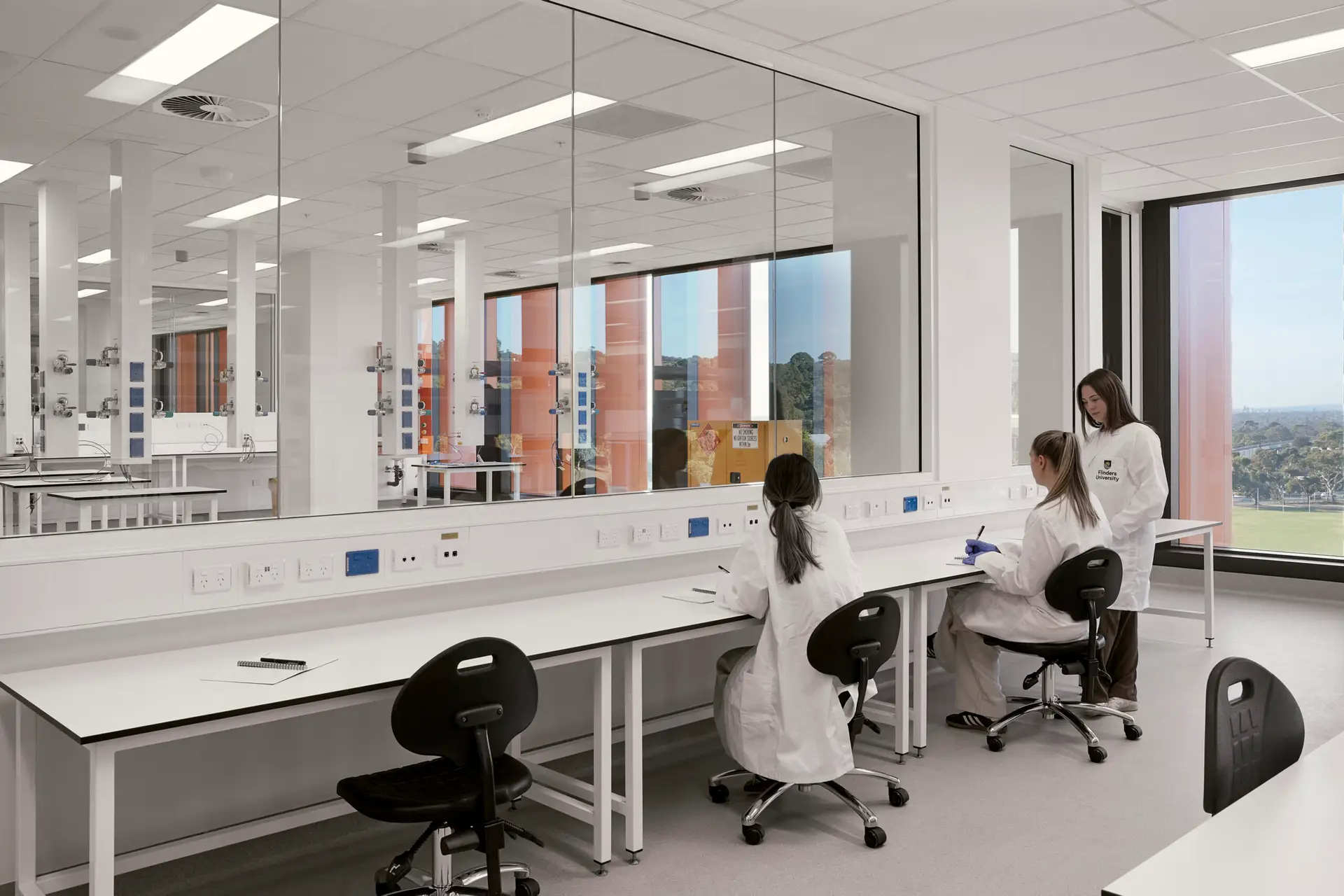
The Flinders University Health and Medical Research Building (HMRB) is a groundbreaking 22,000-square-metre facility that integrates medical research and clinical expertise within a vibrant community setting. As the first completed building in the Flinders Village, it features state-of-the-art laboratories and flexible workspaces designed to foster collaboration and innovation.
Inspired by First Nations narratives of Kaurna Country, the building’s unique expression is characterised by contour lines and a distinct colour palette, responding to land, sea and sky, through its form, outlook, and materiality both inside and out.
HMRB is the first medical research institute globally to achieve a Platinum WiredScore rating, highlighting its advanced digital capabilities. The facility prioritises sustainability, utilising 100% renewable energy and aiming for a Gold rating for WELL and LEED certifications. With its emphasis on community, wellbeing, and cutting-edge research, HMRB sets a new standard for medical research facilities in Australia.
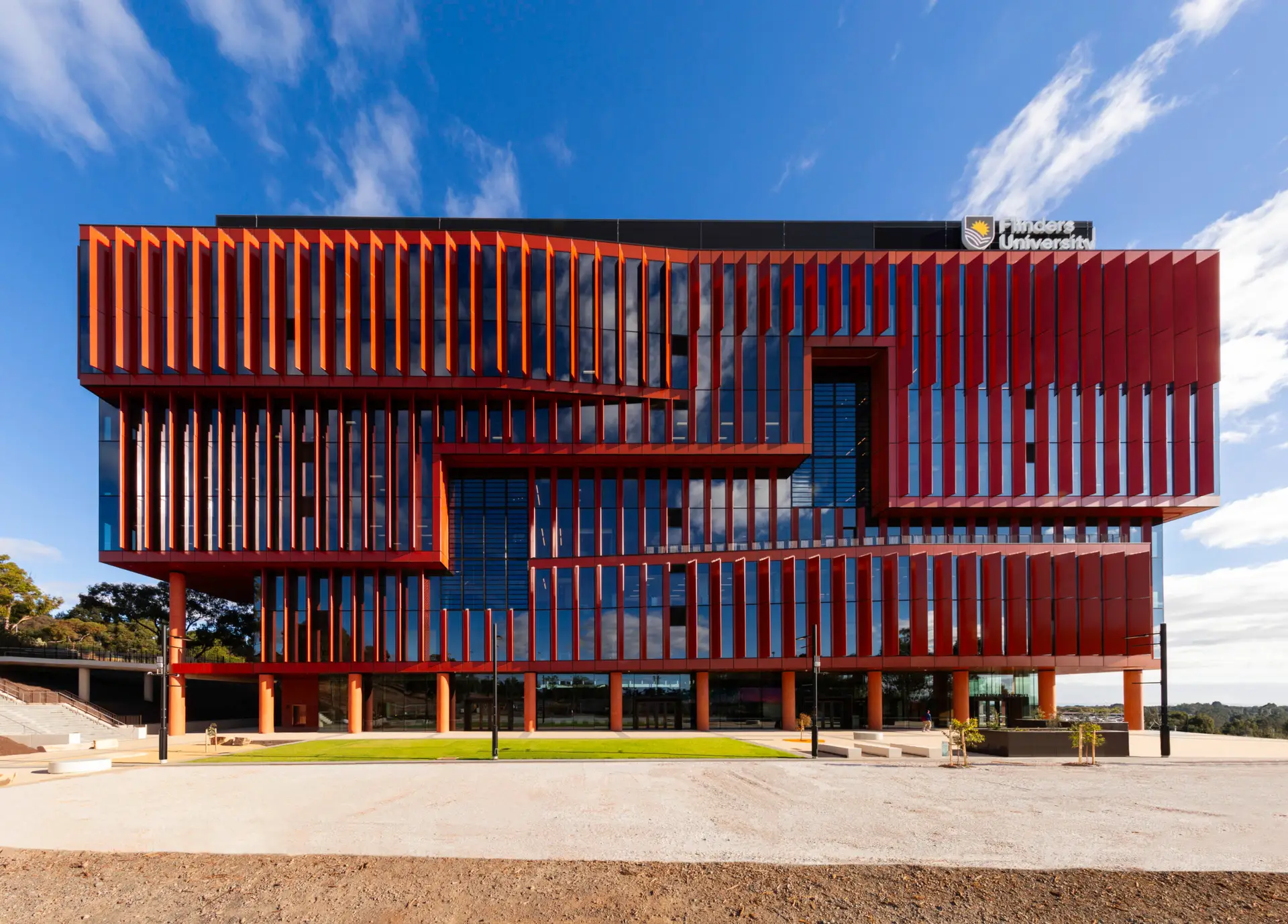
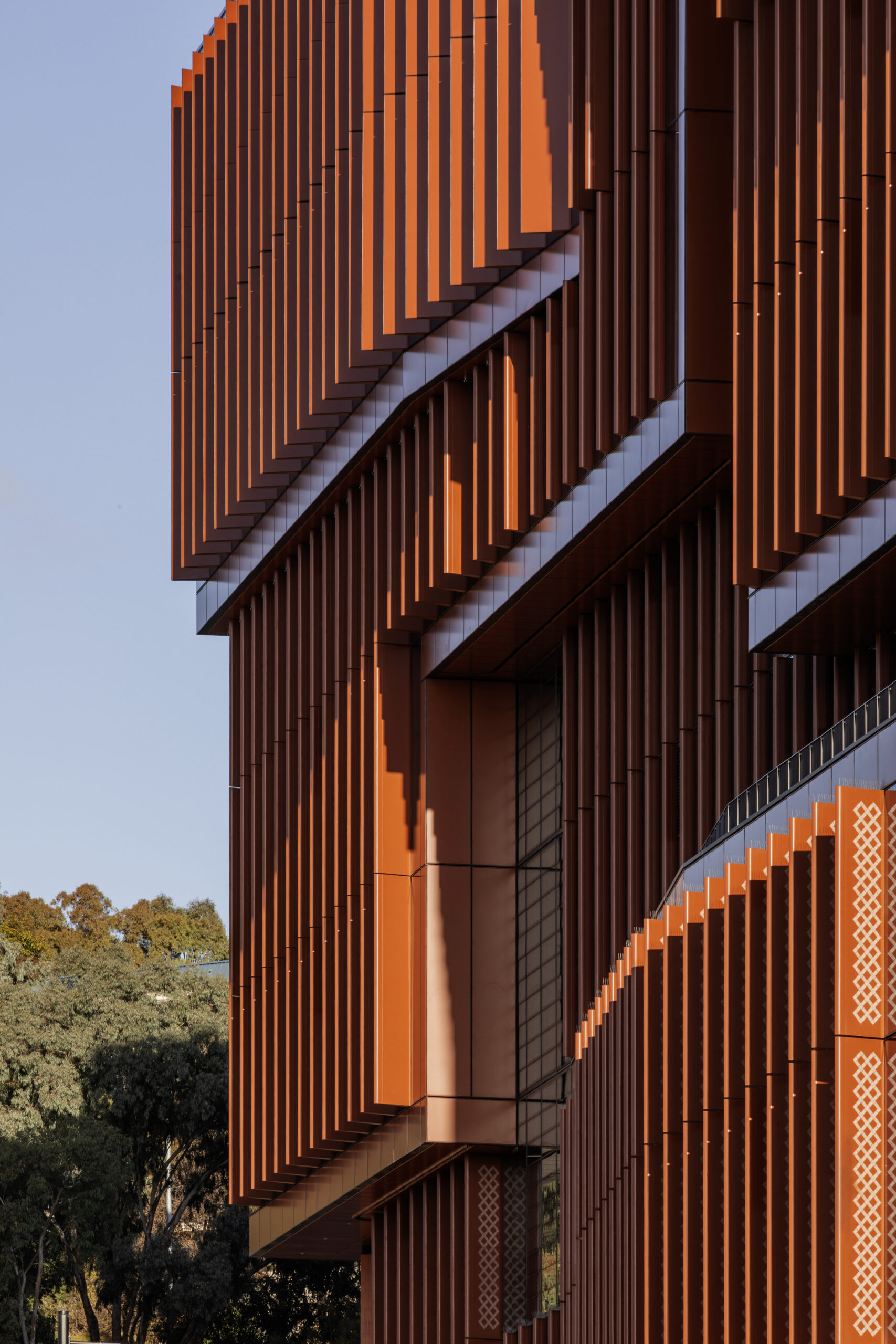
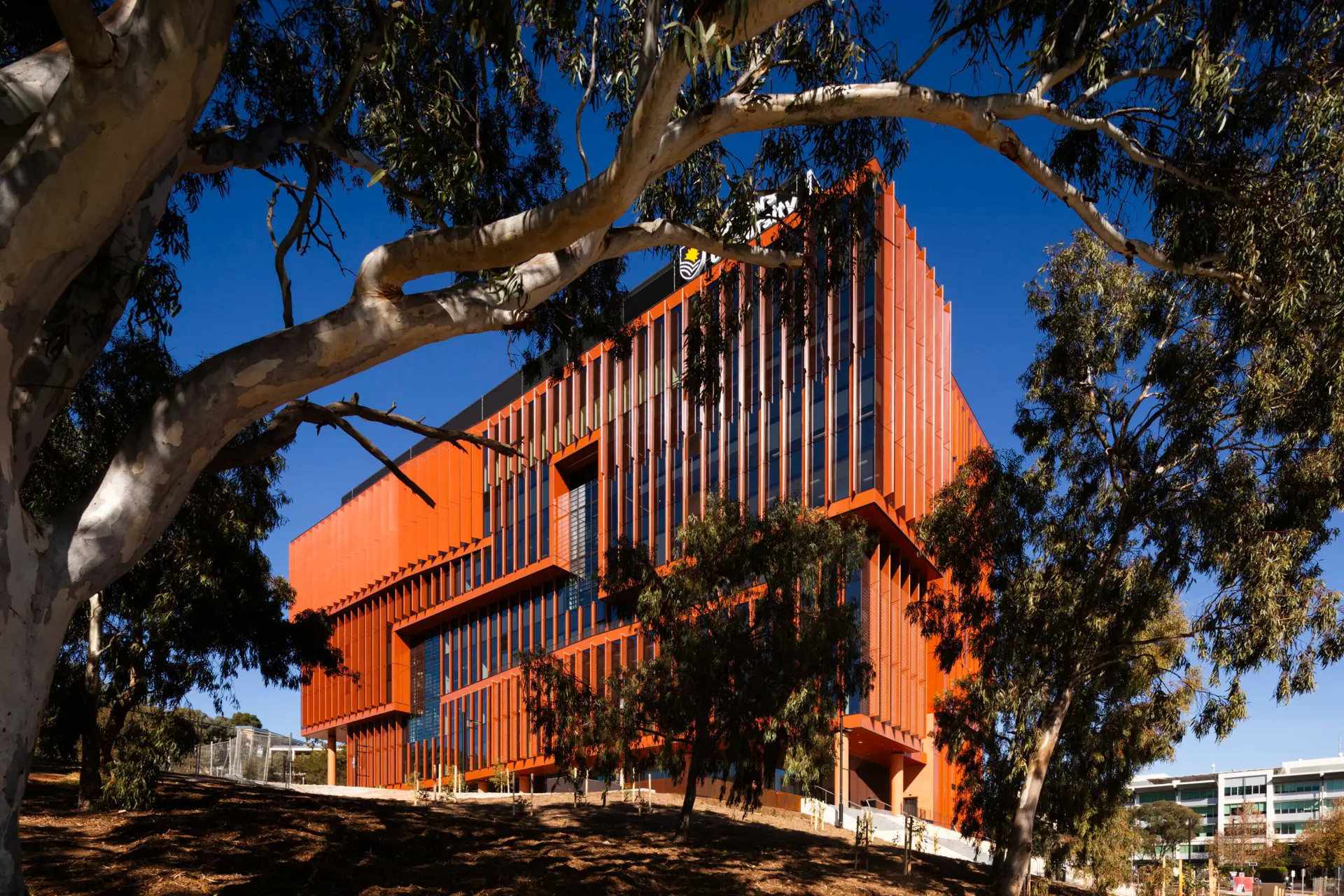
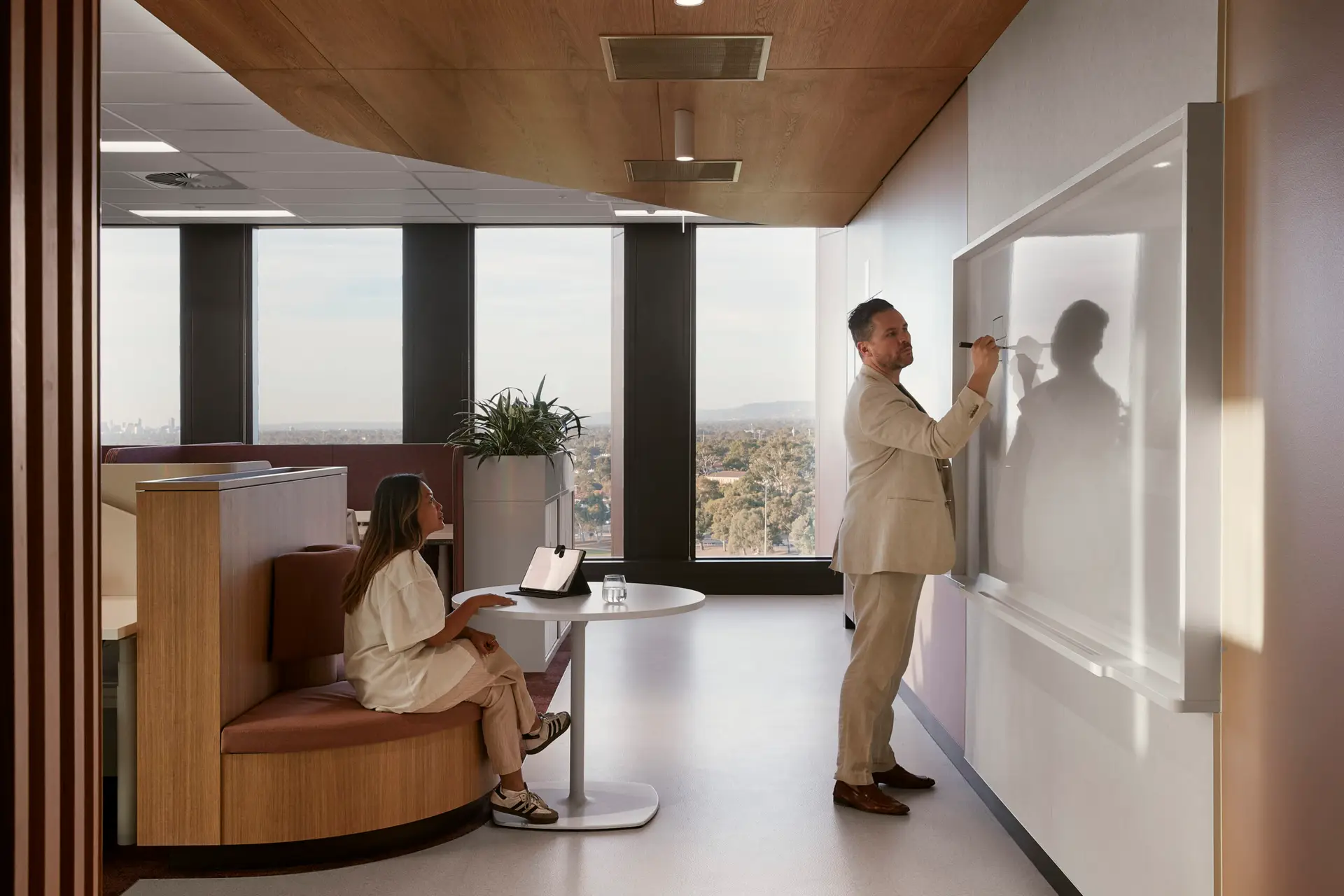
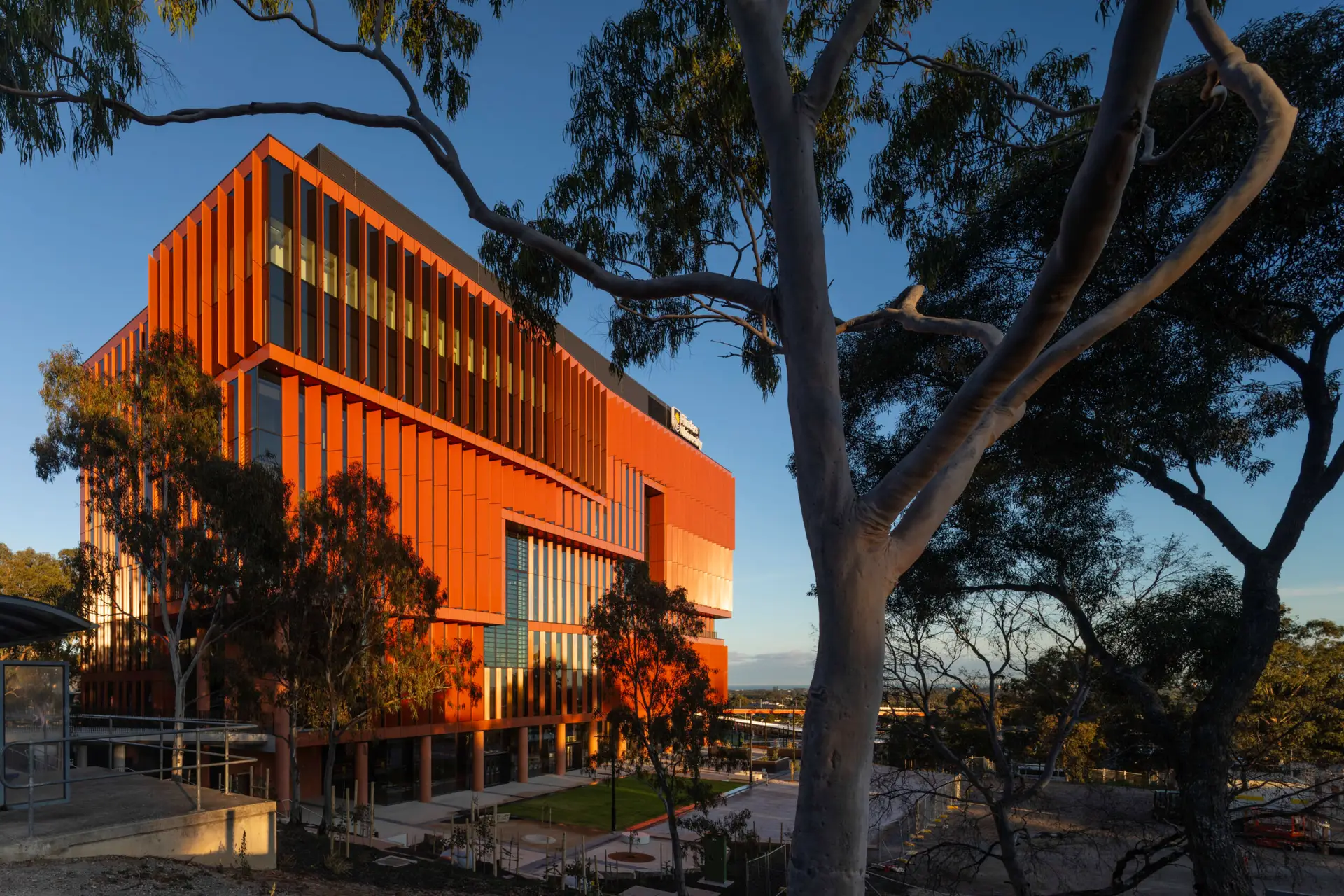
Flinders University ‘HMRB’ does not shy away in the landscape. Instead, it boldly marks the first stage of the new ‘Flinders Village’, linking the rail terminal to the existing university campus.
This state-of-the-art research facility sets a new benchmark for energy efficiency and
environmental management. However, it is the essence of how architecture is used to foster the well-being of its occupants and connect with culture that makes this project exemplary.
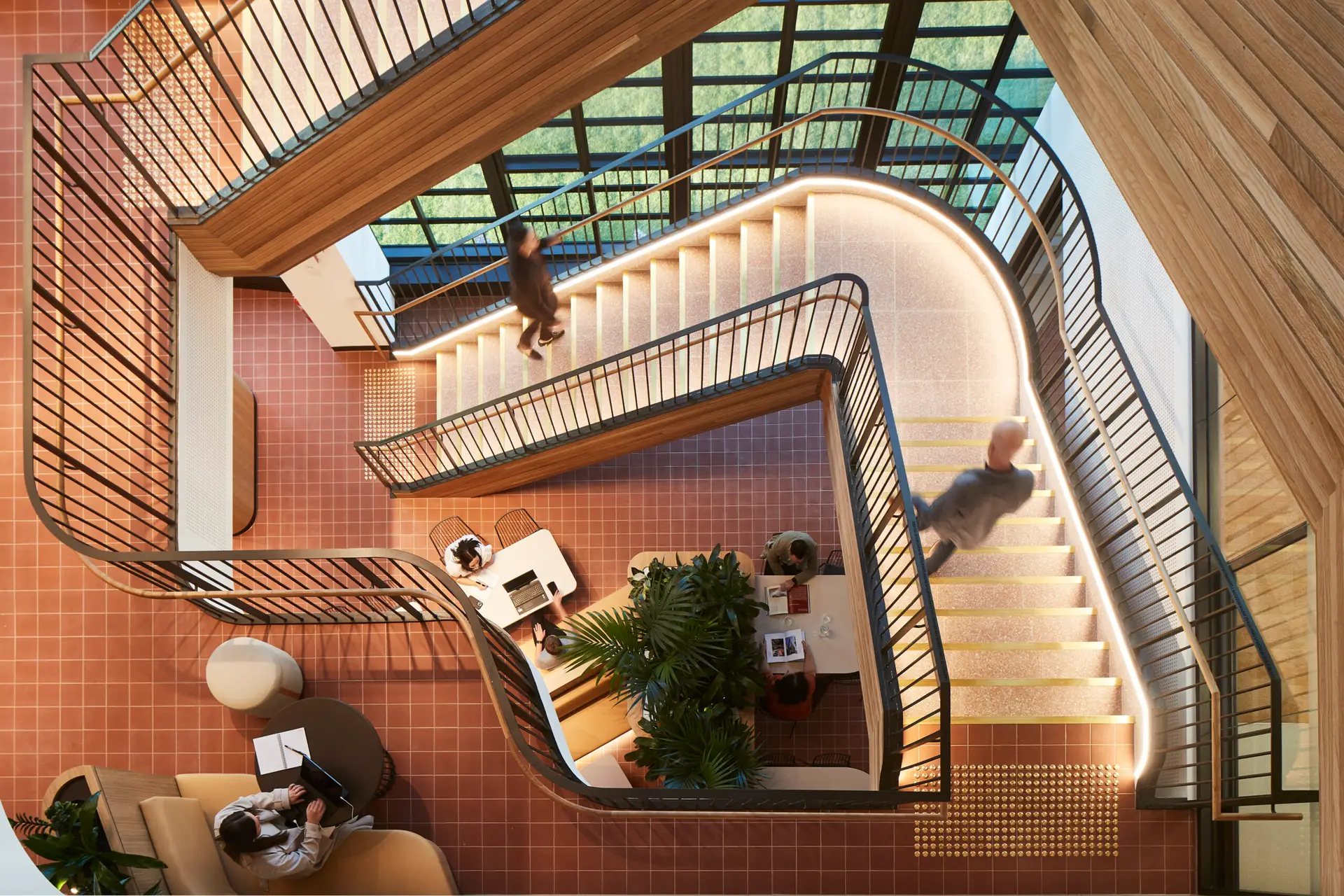
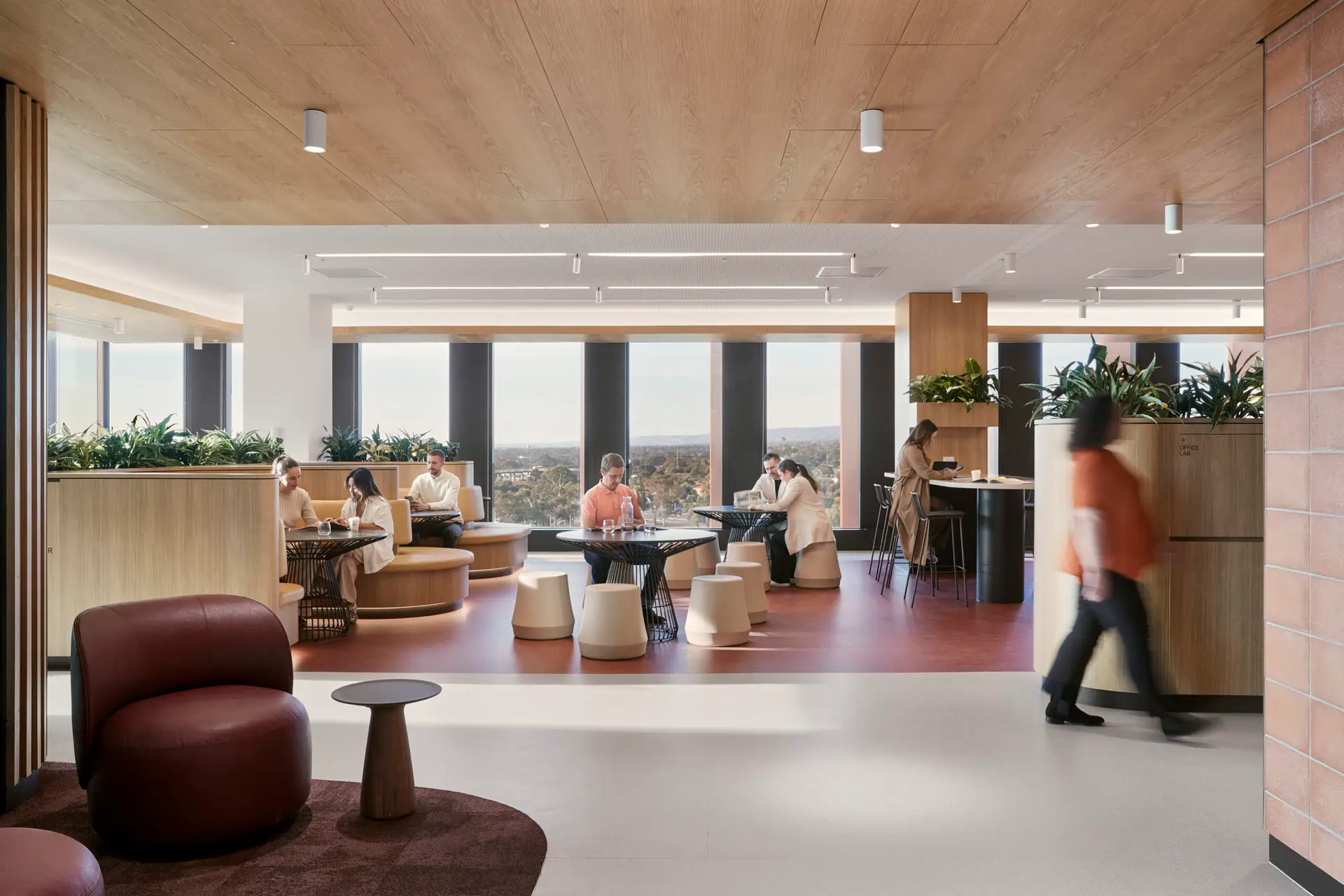
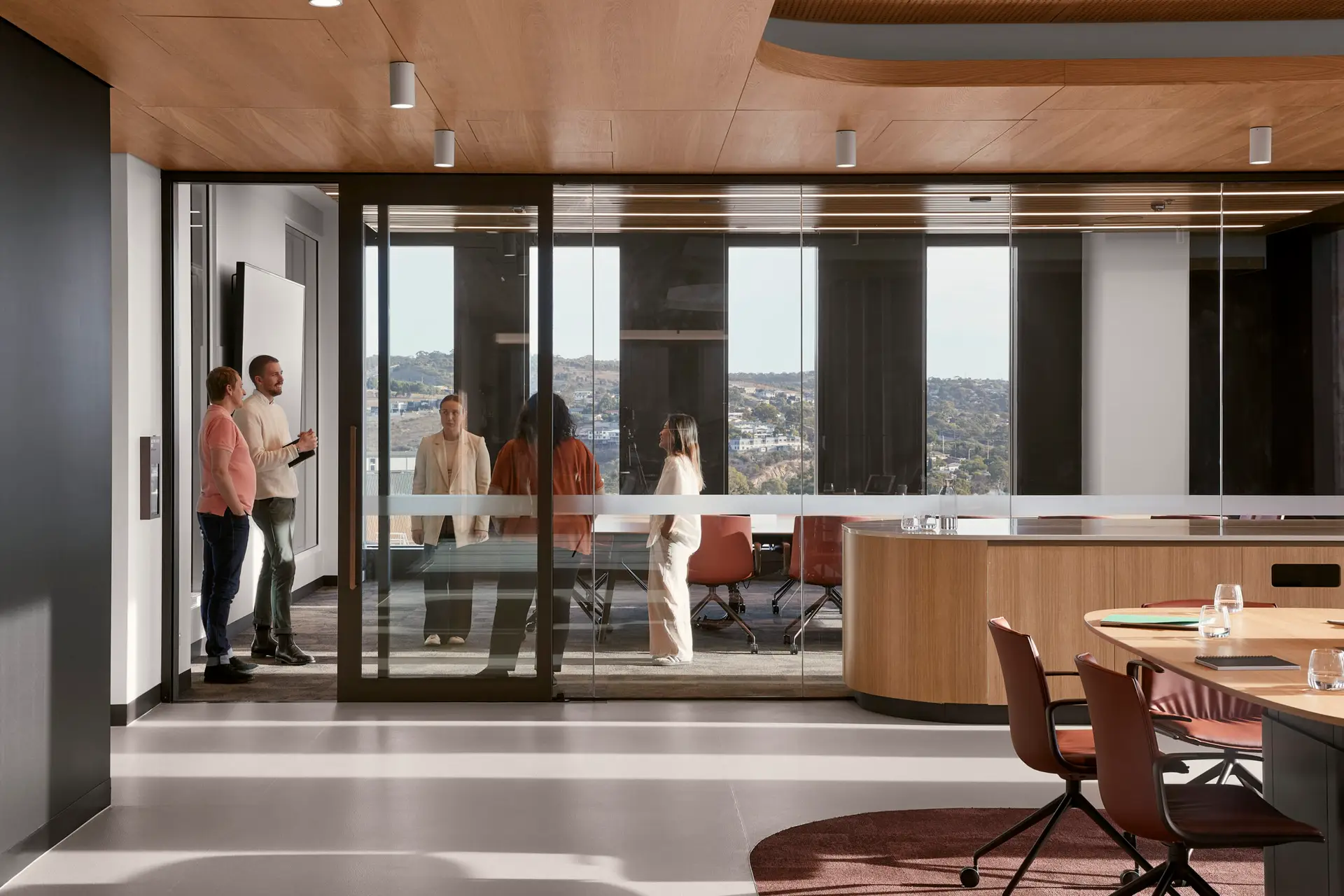
Workspaces and laboratories are interwoven with transitional spaces designed to support occupant health. Biophilic elements punctuate communal areas, and subtle details such as handrail inscriptions, gently encourage occupants to nurture themselves with movement. Shared break spaces cleverly connect each level, promoting interaction among researchers, and strengthening community bonds and empathy.
Extensive indigenous engagement has enabled a deep and curated connection to country. Occupants are lead through intricately embedded narratives, with details and material patterning reflecting place and providing vistas to cultural landmarks. The result is a rich connection to land, sea, and sky, extending the learning model to address cultural well-being.
The design team have successfully fused sustainable principles, collaboration and culture to enhance well-being, with ‘HMRB’ setting precedence for educational design as holistic architecture.
The Flinders University Health and Medical Research Building has effectively woven quantitative and qualitative aspects of sustainable design to spearhead the flagship Flinders Village development.
Supporting the Flinders University Carbon Positive Strategy, the HMRB project has successfully implemented a collaborative design approach to set and achieve ambitious targets including Gold WELL and LEED certifications. Pursuit of these targets throughout the design process has resulted in practical efficiencies in operation through strategies such as full electrification as well as delivering beautiful design outcomes as demonstrated in the carefully optimised shade fins to the facade. Utilising low carbon materials in the structure and architectural finishes further underpin the sustainability strategy.
The building successfully embodies its health focus through design strategies that support the wellbeing of its occupants. Features such as improved daylight and thermal comfort, provision of fresh air, connection with nature and the encouragement of movement through generous vertical and horizontal circulation areas
demonstrate best practice design for wellbeing.
The collaborative approach has also extended to engagement throughout the project with members of the Kaurna community. The building visibly celebrates this connection through the integration of artworks and colour selections that tie the building into its environmental and cultural context.
The 10 storey Flinders University Health and Medical Research Building is the first stage of the University’s proposed Flinders Village master plan. It brings together world leading researchers in medical science, alongside two major hospitals and a new railway station linking to the City. Both the building and associated landscaping cleverly mediate challenging level changes across the site, linking the new station to the wider Flinders campus.
Within the building the architects have successfully addressed a highly complex and technically exacting brief for laboratories and flexible workspaces. Interconnecting circulation and break out areas to promote collaboration and social interaction.
User wellbeing is enhanced by a rich cultural narrative throughout; the outcome of early and genuine engagement with the University’s Cultural Narrative and Indigenous Art Advisory Panel. The cultural narrative extends to the striking terracotta hued finned facade, optimised for thermal comfort and energy efficiency. The focus on sustainability and wellbeing is recognised through Well and LEED Gold Certification.
The Health and Medical Research Building sets a high benchmark for future stages of Flinders Village, attractively accommodating its complex, synergistic functions in a highly efficient and handsome landmark structure. It is well deserving of the 2025 Architecture Medal.
The research being undertaken at Flinders is world class and transformative for the communities we serve. The potential for such research is now able to be multiplied with the HMRB as we bring together our best and brightest researchers into a single space, supported by outstanding new research infrastructure and facilities. This has enabled a synergistic uplift in the research we undertake, as teams develop and grow new collaborations across teams and research fields to provide clinical and community impact.
Client perspective
Andrew Schunke, Principal in Charge
Alan J Duffy, Design Lead
Diana Rosenthal, Interior Design & Stakeholder Engagement Lead
Francisco Espinosa, Designer
Andrew Sant, Designer
Esther Mavrokokki, Project Leader
Daniel Stanning, Interior Designer
Lauren Spagnoletti, Interior Designer
Tahlia Payne, Interior Designer
Samantha Decena, Technical
Sam Wee, Interior Designer
Wilfred Cheung, Graduate of Architecture
Ankita Sardana, Designer
Aaron Casagrande, Designer
Jess Collins, Designer
Emily Brennan, Project Architect
Anais Gowland, Interior Designer
Setareh Ghasemi Motlagh, BIM Coordinator
Ruth Wilson, Project Architect
Ann Nguyen, Graduate of Architecture
Mott MacDonald, Project Manager
Arup, Services Engineer
KBR, Services Engineer
Wallbridge Gilbert Aztec (WGA), Structural Engineer
Resonate, Acoustic Consultant
Rider Levett Bucknall, Cost Consultant
Oxigen, Landscape Consultant
Dsquared Consulting, ESD Consultant
Jacobs, Laboratory advisory and compliance assistance
Parallax, Signage Consultant
BuildSurv, Building Surveyor
Urps, Planning Consultant
Aunty Yvonne Koolmatrie, Artist
Karl Meyer, Collaborating Artist
James Tylor, Artist