
Wurundjeri Woi Wurrung peoples, of the Eastern Kulin nation
Victoria
Palmerston Street House stands amongst other remnants of 50s and 60s alterations undertaken by European migrant occupants in the Carlton area. Born of necessity, they are often characterized by the skilful use of sturdy materials such as concrete, bricks, and mortar, reflecting a ‘builderly’, yet poetic quality.
This project found keen inspiration in these dwellings, and together in response to a tight budget, a programme of adaptive reuse was pursued, leaving the house, at first glance, untouched from the street, with glimpses of change revealed only at second or third passing.
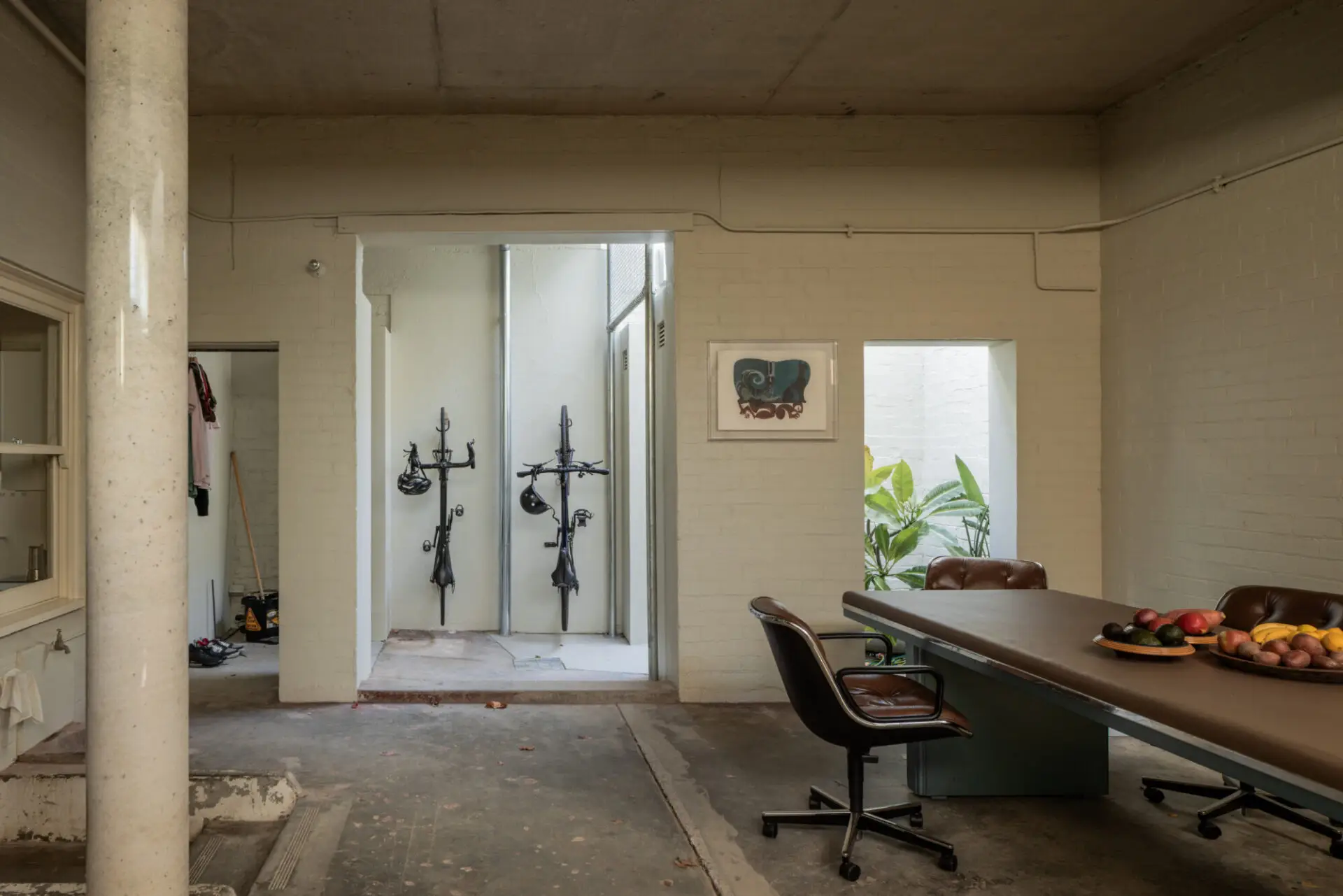
Intended to be used as a home and office space, existing spaces were re-examined in light of their newfound context, considering their multifunction potential: A garage became a space to sit and meet, not just somewhere to park a car – an upstairs bedroom became a concealed outside terrace.
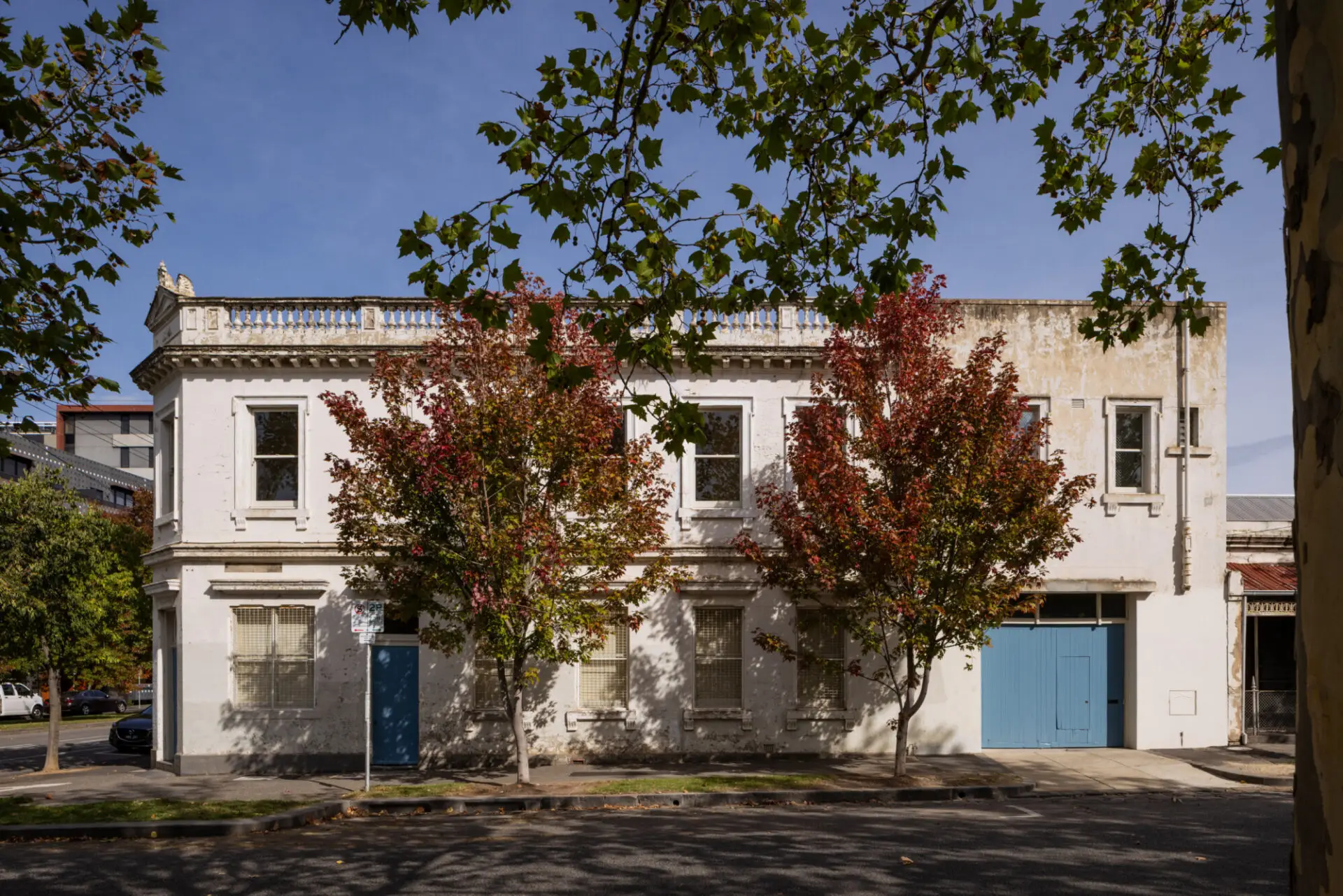
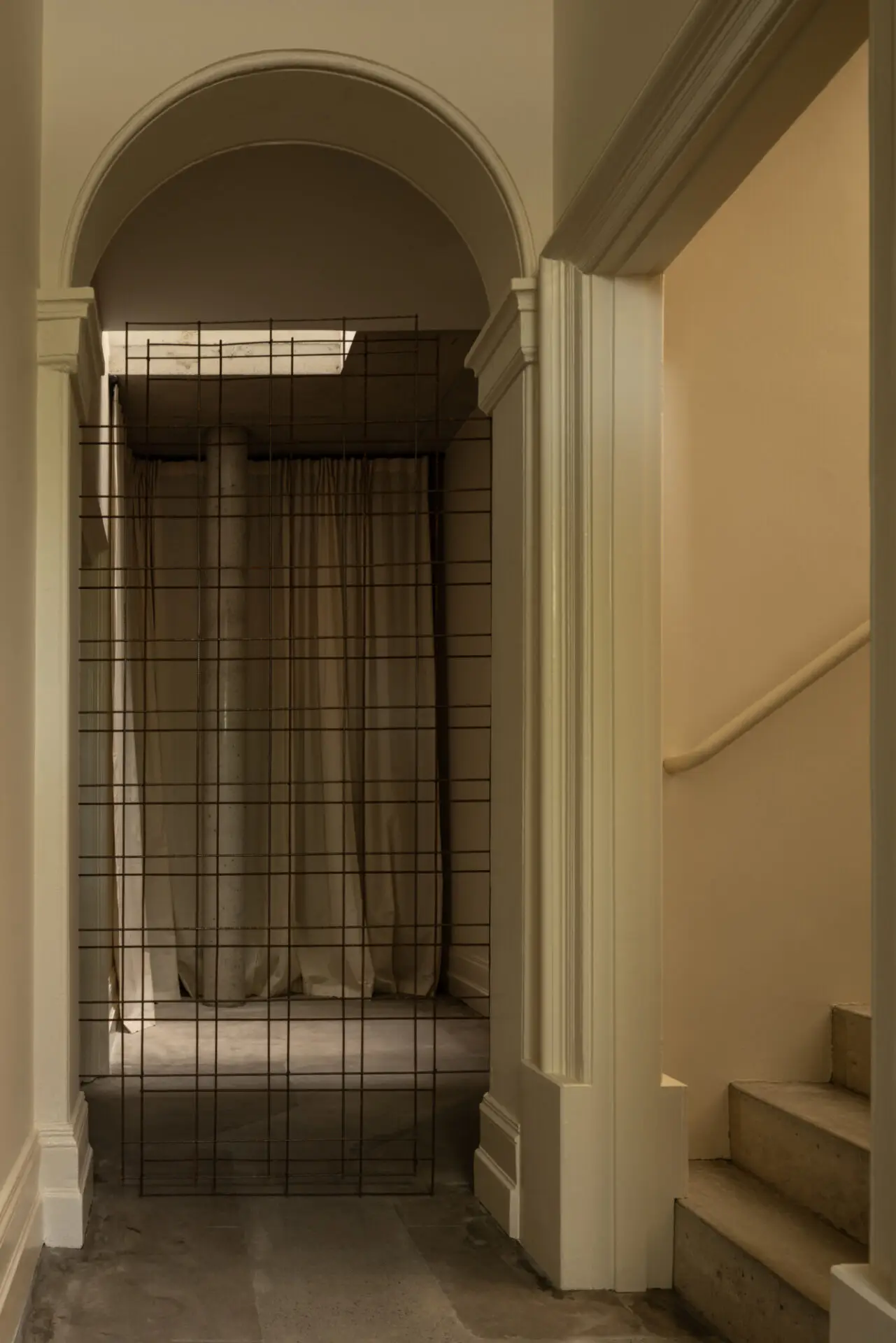
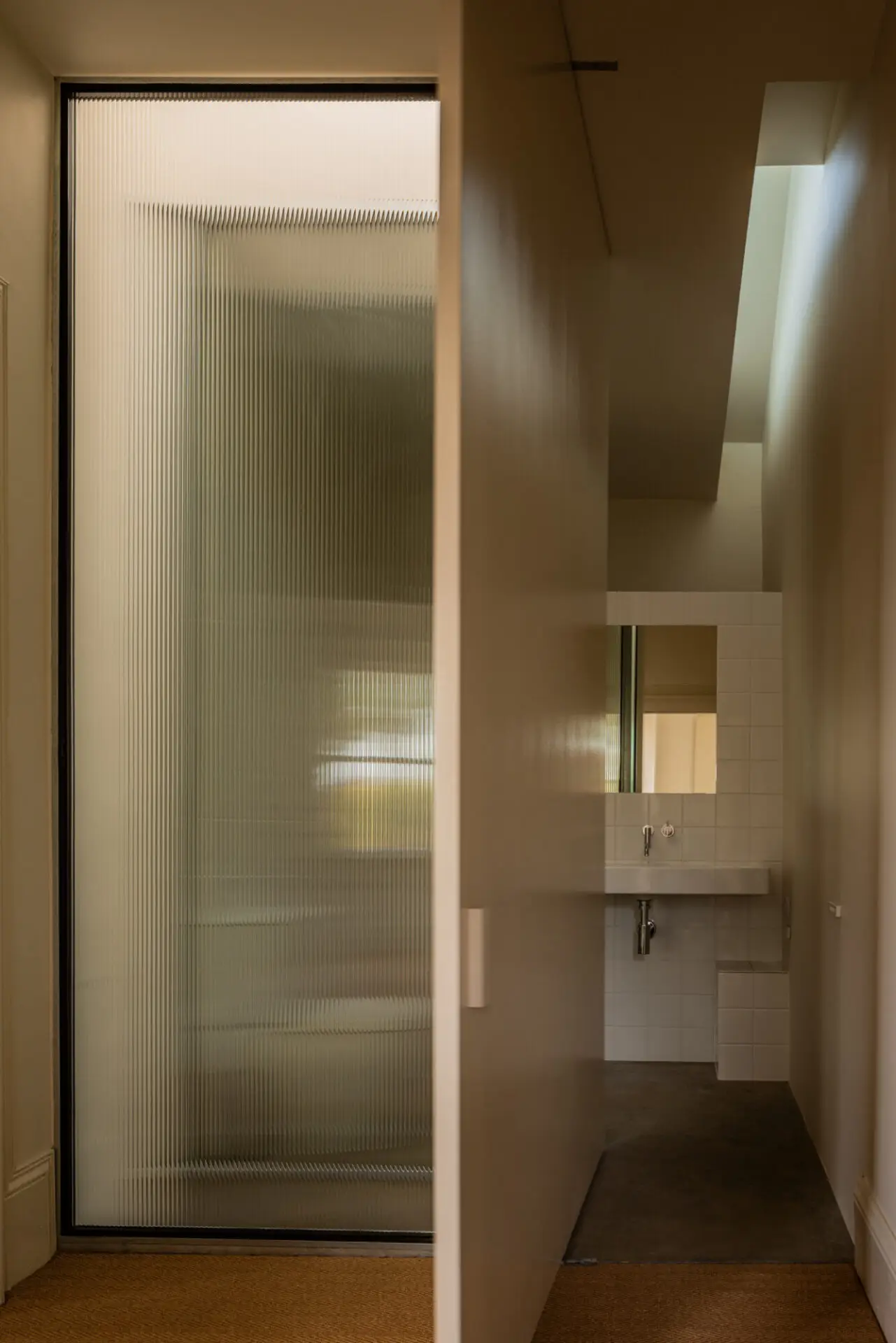
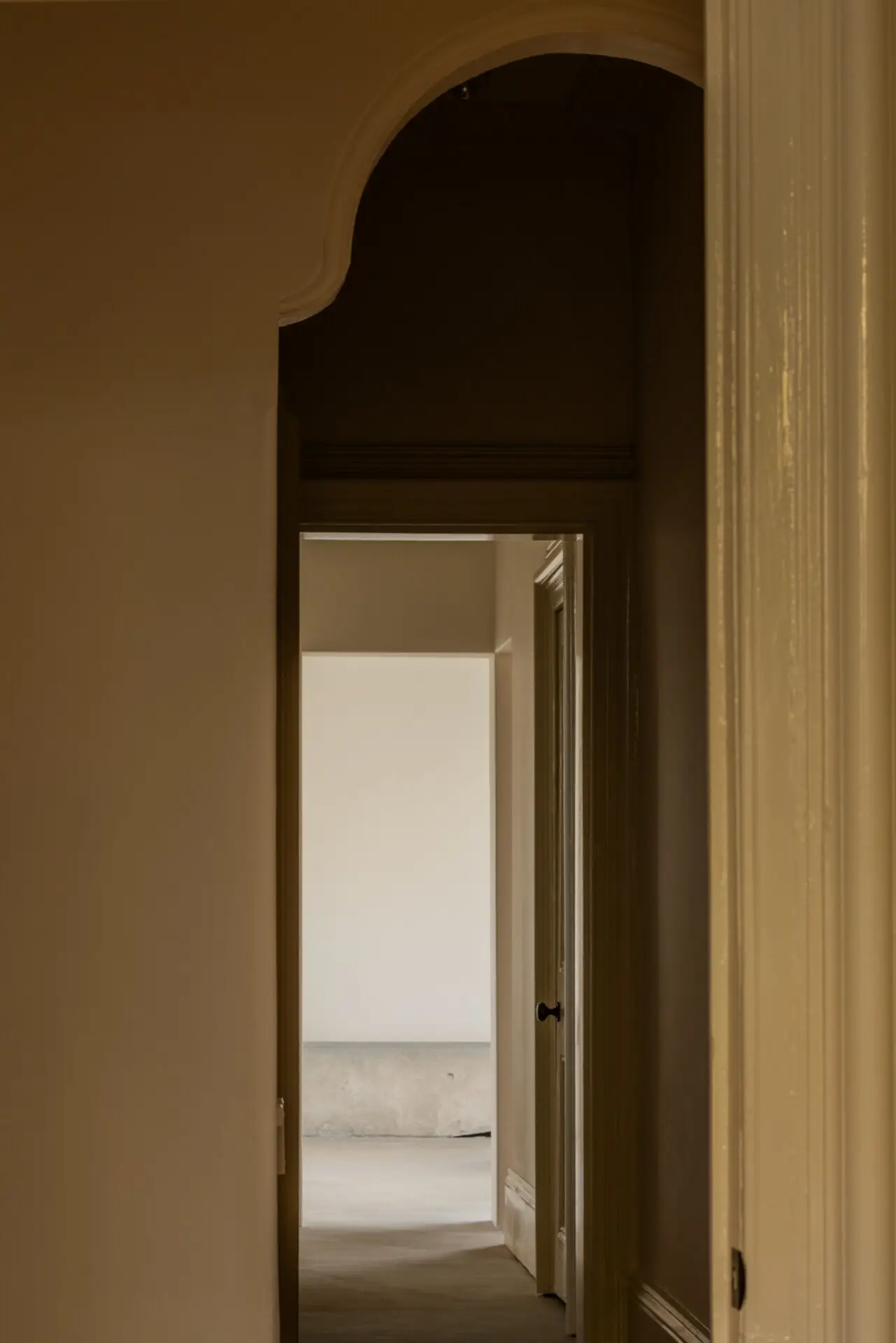
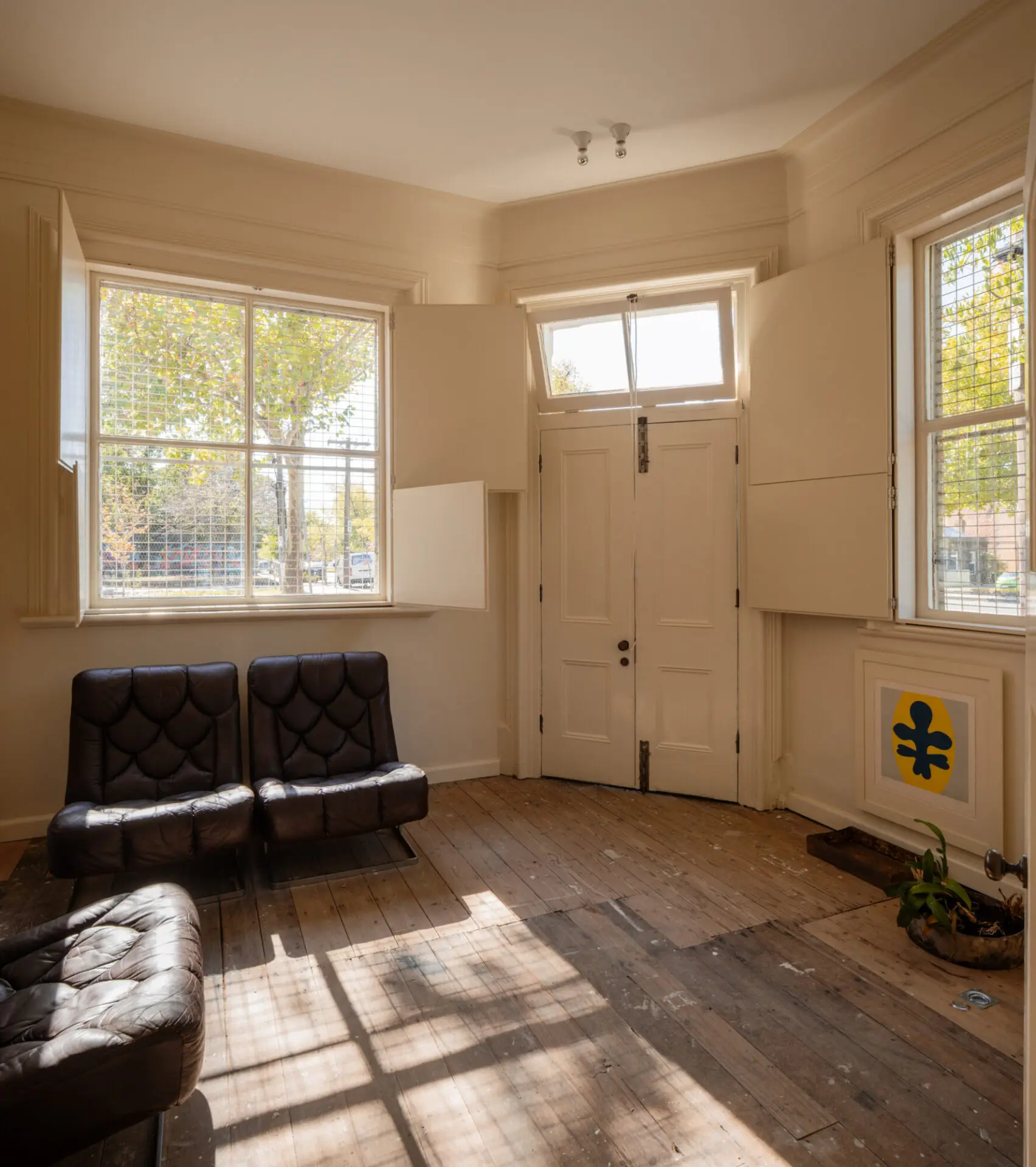
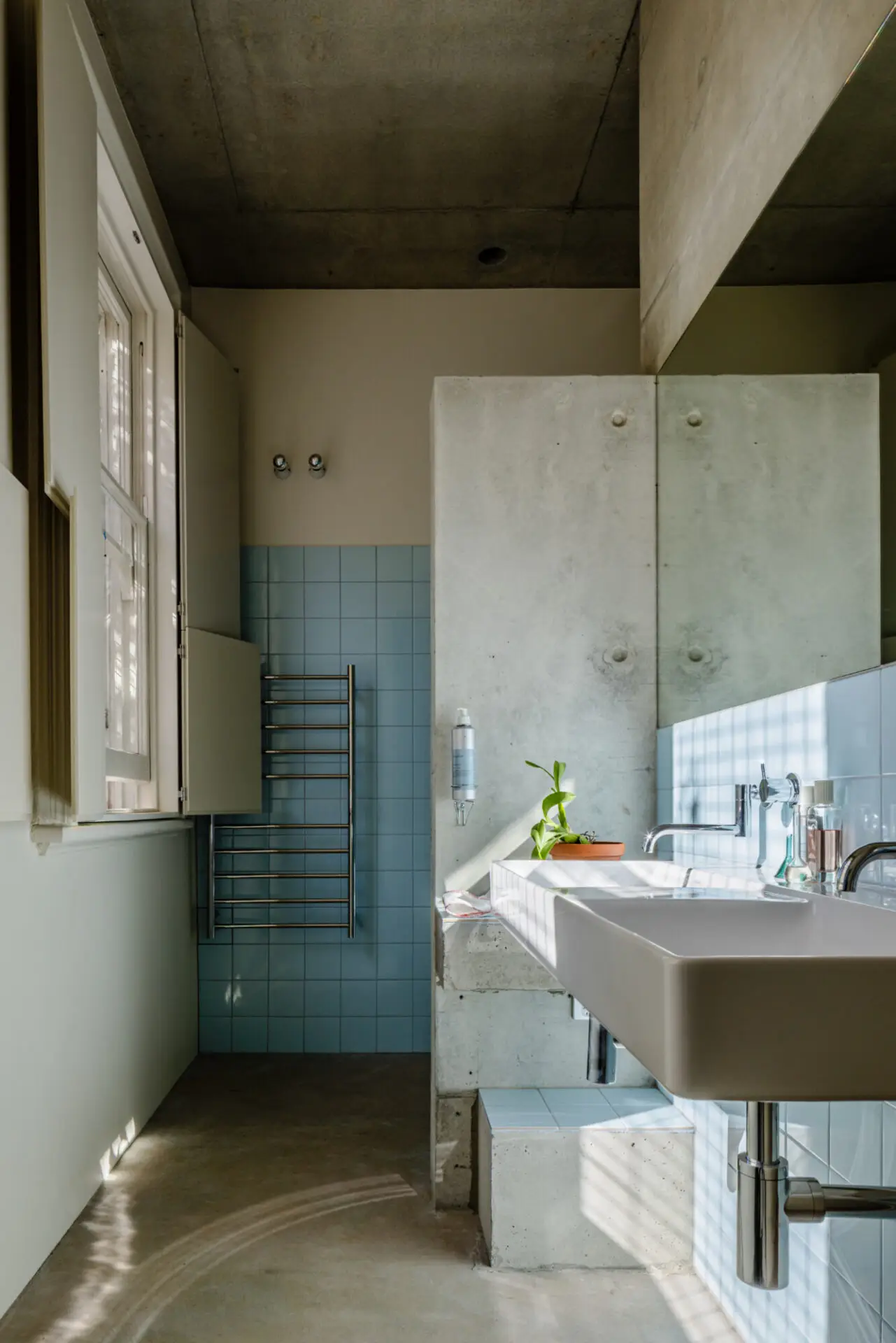
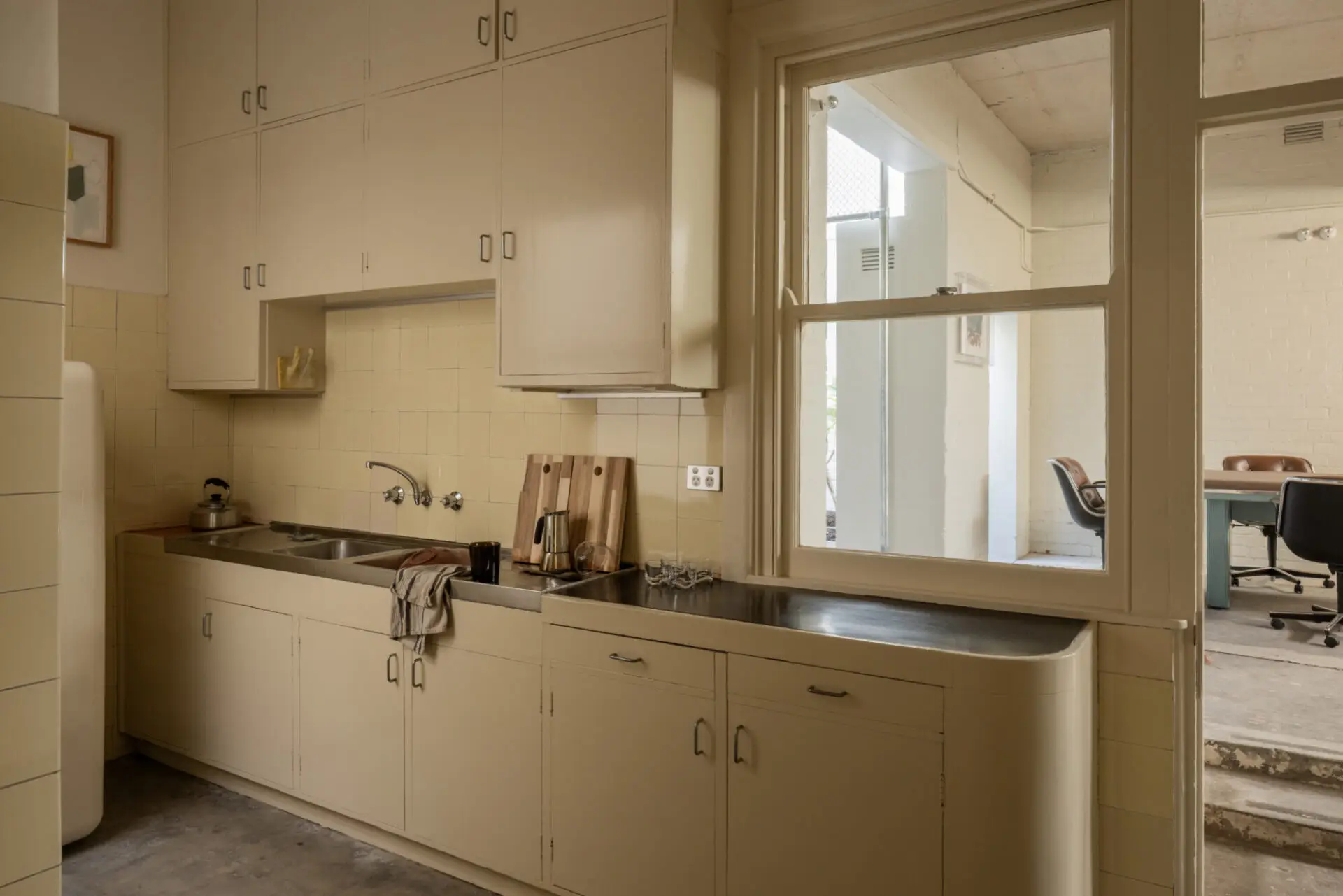
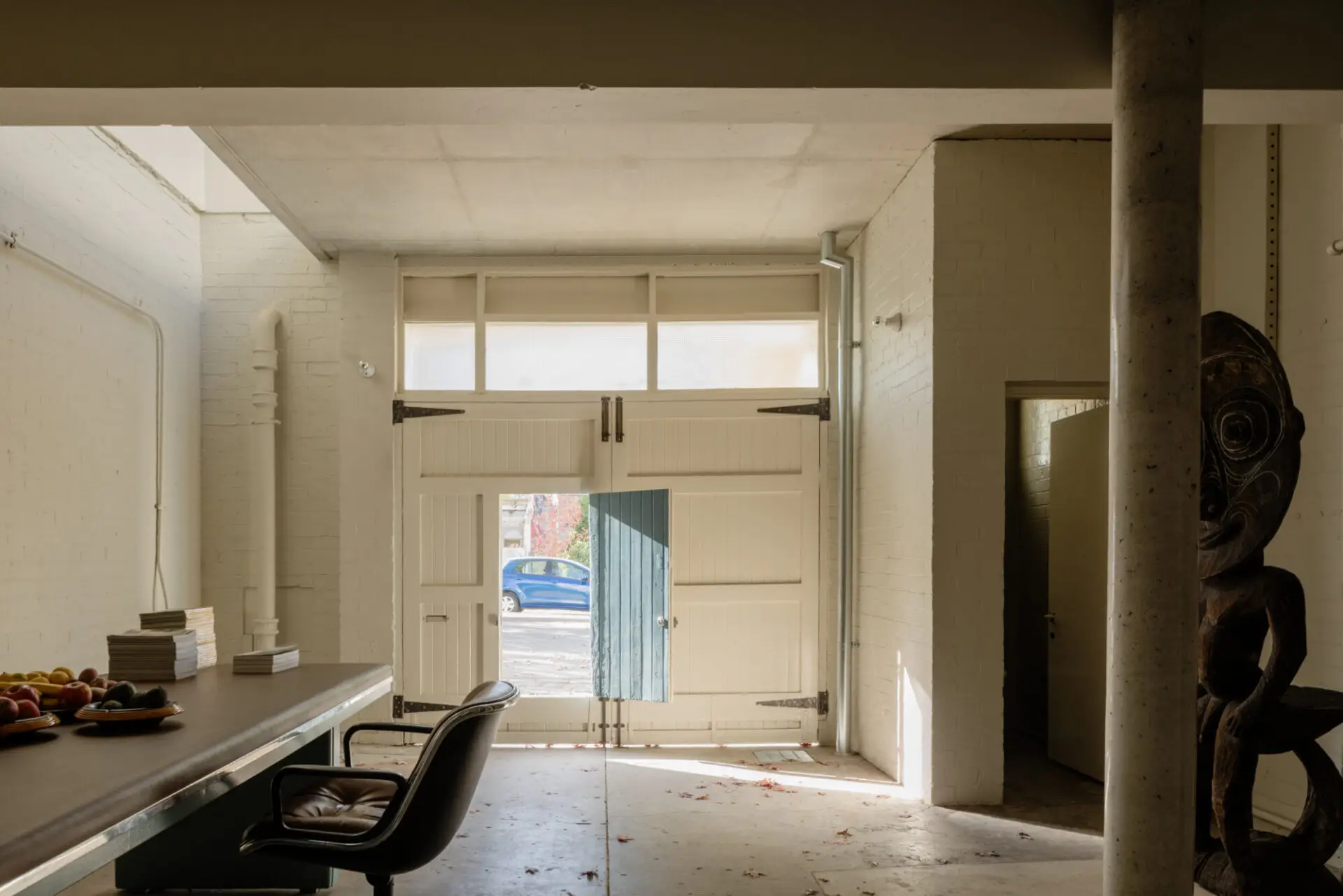
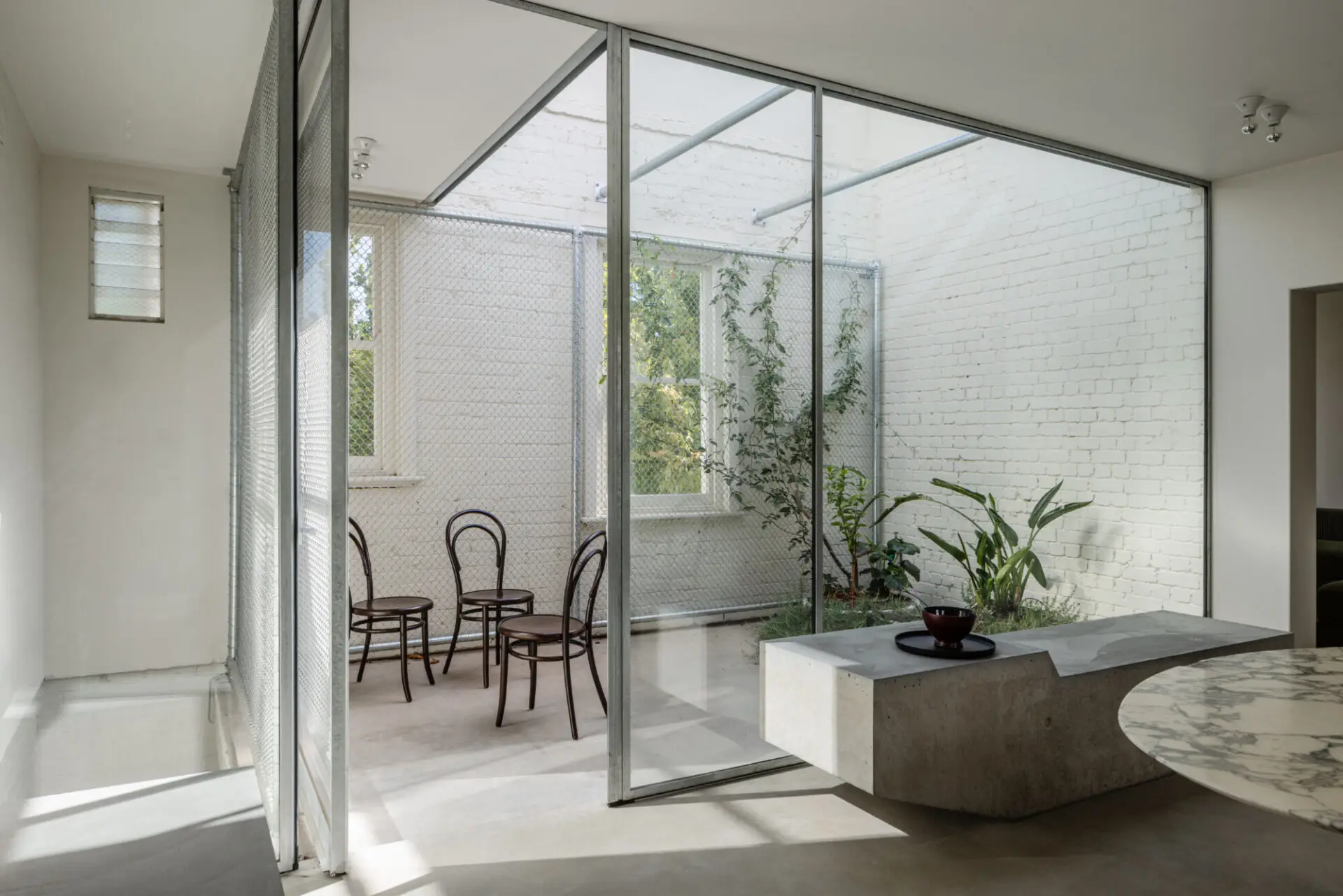
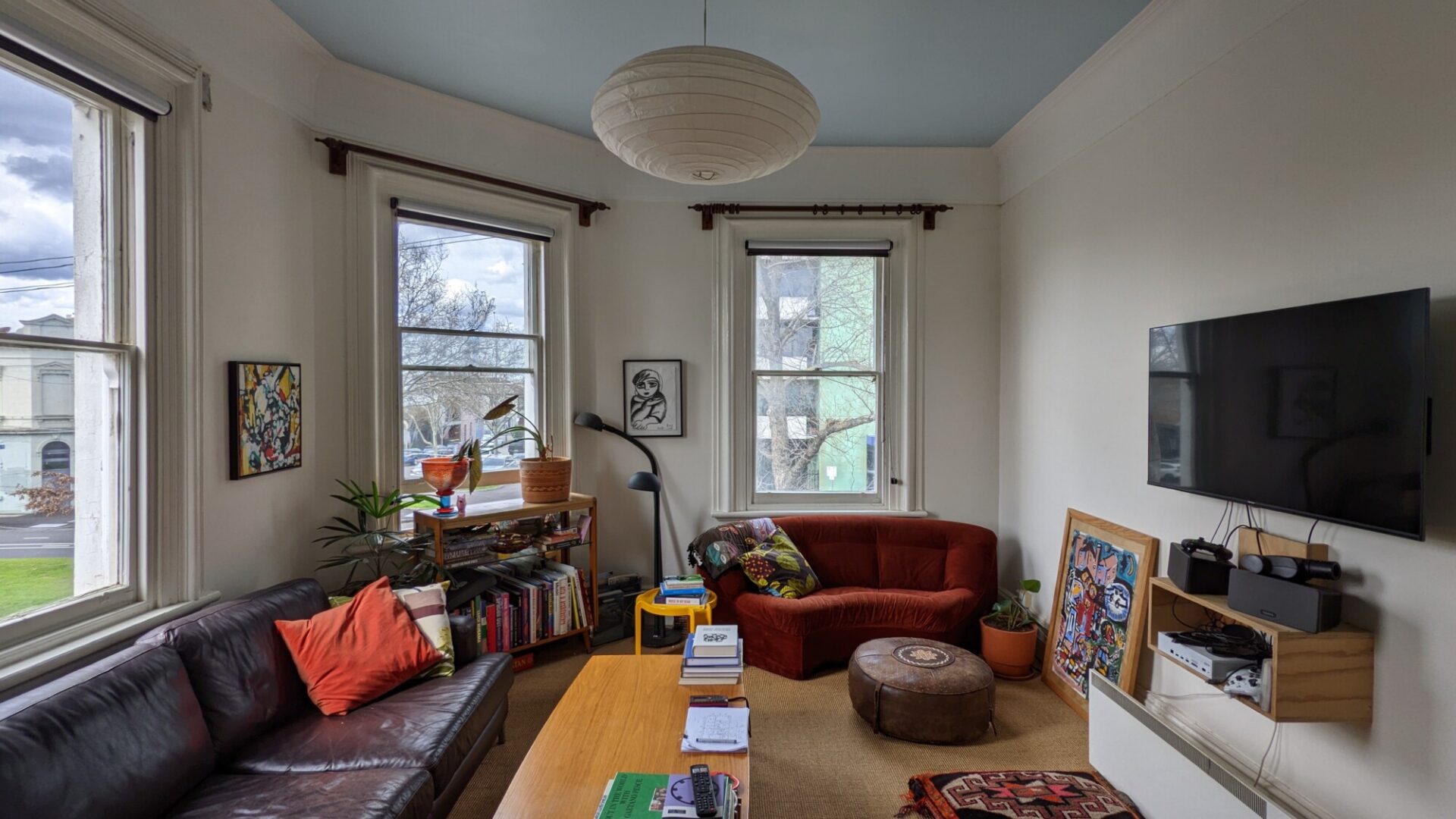
Robert Simeoni’s Palmerston House asks us to understand the existing spaces we inhabit and honour the social history embedded in built form. The original Victorian building, the migrant vernacular of the 50’s and 60’s, and now Simeoni’s intervention as another layer to this building’s story.
The architectural response is rather than simply privileging the original fabric, he embraces the ‘builderly’ migrant alterations and highlights them in a way that these details are rarely afforded.
Extracting elements, retaining their raw honesty while re-presenting them in this contemporary adaptation as important relics of Carlton’s past. Floors left unfinished, a gully trap is retained, not demolished. The 50’s kitchen not gutted and removed but restored and painted.
Significant interventions – the second storey terrace, the concrete stairwell, bathrooms, treated with the robust honesty of the 50/ 60’s alterations. Elements come together in a way that is cohesive and whole, unified by a restrained material pallette. This project does not announce itself, but quietly weaves together old and new through light, texture, and incredible attention to detail.
Simeoni redirects and refocuses value onto things that can be unappreciated meticulously designing them into his work. For this considered approach this work is a worthy recipient of this Architecture Award.
We really valued the time and care invested in exploring multiple design options and refinements. It was a thoughtful and engaging process that balanced complex regulatory requirements with our strong preference for respecting and working with the existing building. The outcome is a nurturing, uplifting environment that feels both exciting and deeply considered.
We have also been delighted by the unexpected moments that emerged, especially through opening up the building. These interventions have created new pockets of space and connection, brought in generous natural light, and introduced improved cross ventilation, making the building feel fresher, calmer, and more alive.
Client perspective