
Doonan House | Kelly Martin Architecture

Our brief was to build a home that fosters a sense of connection and closeness within the family and stimulates an awareness of the greater world outside of self.
A semi-permeable KLD space connects the wings and opens up to the southeast/northwest while maintaining shading from the late summer sun.
Sightlines through the building were important to maintain a visual connection to the landscape, as was direct access for as many rooms as possible.
A sense of lightness was created by lifting the building off the ground and lifting the living space roof and fully opening on each side, which was contrasted with the heaviness and anchoring of the rammed earth walls.
The wings either side were separated via use. To one side was the family sleeping zone with direct access to the outdoor shower at the far end. The other contained the carport, mudroom and guest/office.
Dorge | Base Architecture

Dorge stands proudly at the precipice of Toowoomba’s Glenn Lomond Park. Through its grandeur of scale, form and materiality it is a home that presents itself to be robust to the first-time visitor, however once welcomed inside, the softer interior begins to reveal itself. The interior architecture humbly steps back to play background, while allowing the captivating surroundings of this family home to take the lead role. With a subtle nod to Australian homesteads of the past and present, this home celebrates the best of rural life and a harmonious relationship with landscape.
Hopewell Street Residence | W.I.M Architects
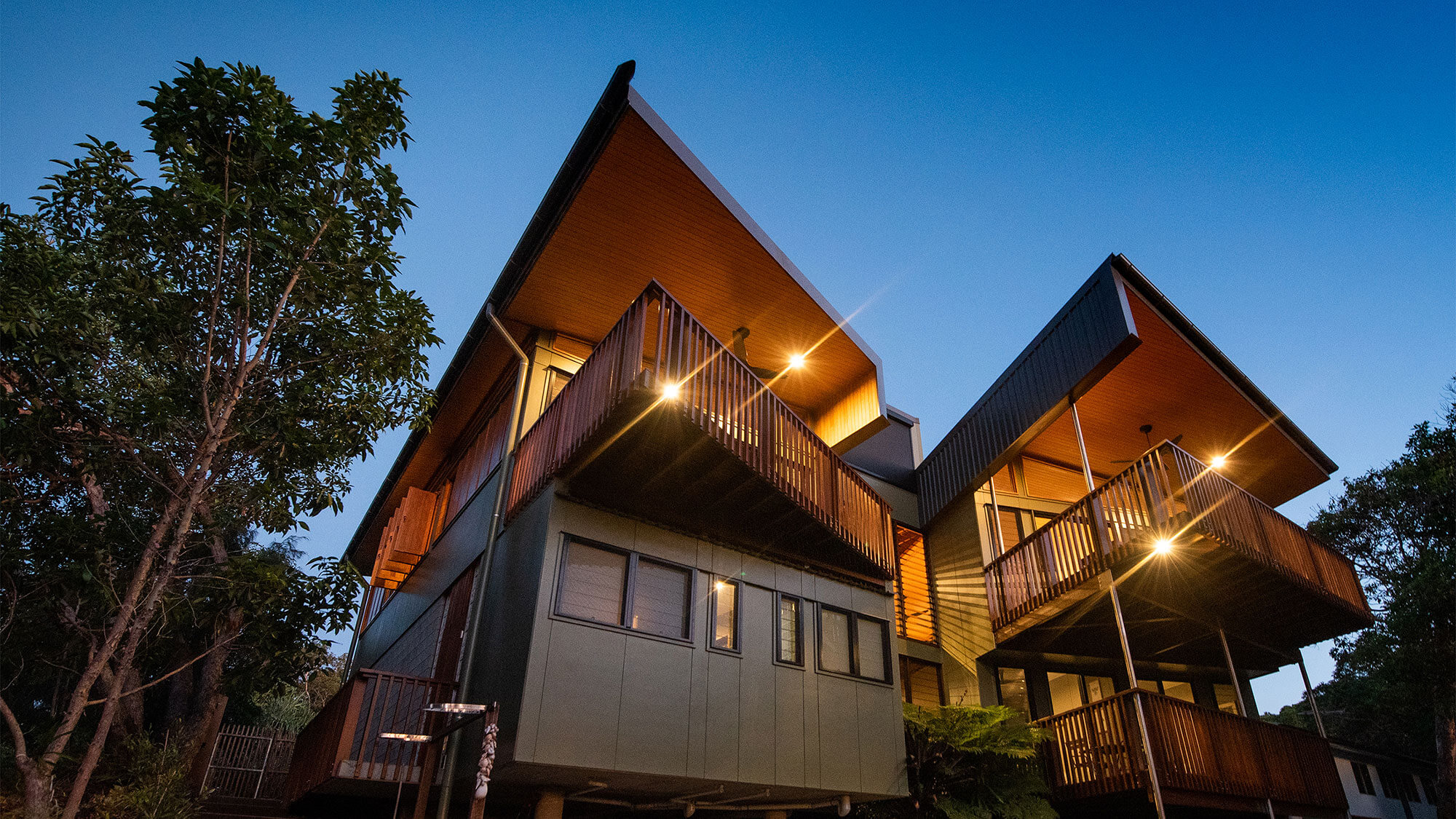
The Hopewell Street Residence was founded on the idea of creating a modern adaptation of the beach shack with functional spaces that could accommodate dynamic programmes for the owners.
The primary design was formed around two distinct wings with a connecting breezeway link across the levels. The wings are divided into both public and private realms and the programme is addressed through the various levels.
The materiality was to be raw and natural and in some layers blends with the natural environment/context.
The process involved a strong integration with both Engineer and Builder which through weekly site meetings, sketches after surfs and a buy in by all parties led to a high-end outcome with strong ensuing relationships between client, builder, and architect. The house is as much a representation of the client and builder as it is the architect.
Huet | Base Architecture
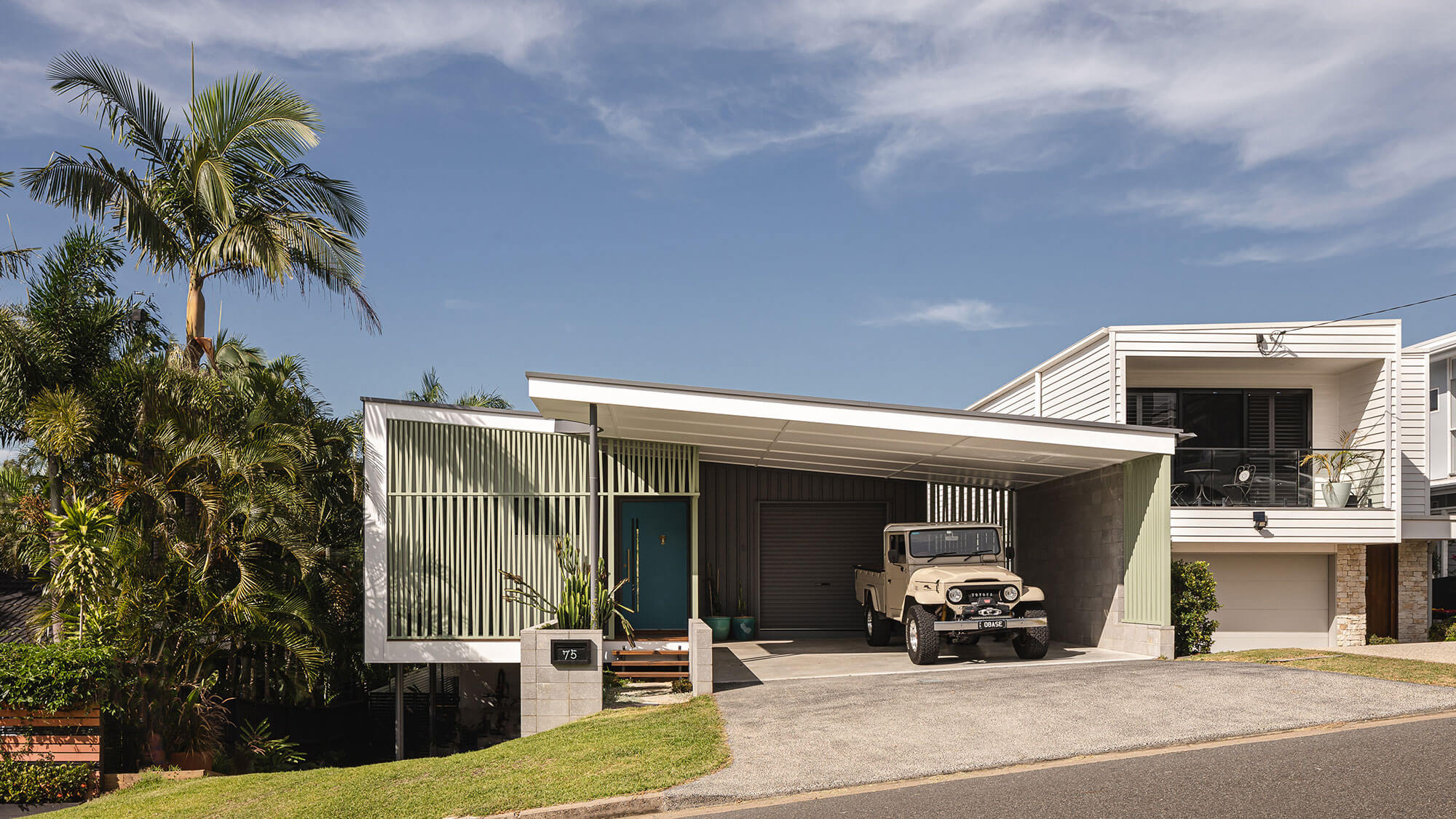
Our clients’ home commands attention with its bold architectural statement, strategically positioned to captivate both street level and surrounding landscape views. Reflecting their appreciation for mid-century aesthetics, the design blends retro influences with modern sensibilities. Deliberate choices in facade detailing and dynamic roof forms create a distinctive identity while enhancing the streetscape’s visual appeal. Internally, the layout maximises spatial efficiency, seamlessly integrating living spaces with private areas through clever design solutions. Careful consideration was given to construction methods, ensuring a high-quality build within the budget constraints. Emphasising natural light and ventilation, the home prioritises sustainability and comfort. As a residence tailored to two town planners, it sets a new standard for suburban living, harmonising with its environment while promoting attainable and sustainable development.
Kiamba Valley Farmhouse | Aspect Architecture

Located in the Sunshine Coast Hinterlands, the Kiamba Valley Farmhouse draws from the site’s history of cattle farming, to create a dwelling that celebrates the traditional vernacular of the Queensland farmhouse. Anchoring itself harmoniously amid the rolling hillside, this family residence is a tribute to the joys and challenges of rural living. The sprawling outhouse style pavilions, characterised by meticulous craftsmanship and robust construction, lay the groundwork for the residence’s future narratives. After residing in the onsite cottage for an extended period, the owners recognised the need for a more expansive home to accommodate their growing family, while strategically elevating the different and somewhat undiscovered vantages of the property they have always known. The choice to maintain a sense of the traditional with the new resulted in a home that combines a sense of people and place.
Moffat Beach House | KIRK

Moffat Beach House sits on a constrained site in the sub-tropical coastal climate of the Sunshine Coast. It is the first CLT (cross laminated timber) house to be constructed in Queensland using prefabricated Mass Engineered Timber construction and erected in just seven days. All the timber used for the construction has been sourced sustainably, grown from regenerated forests, and fabricated locally within Australia. The CLT and GLT (glulam timber) used in the project regenerated from the Australian softwood plantations in only eight minutes. The beach house that previously sat proud in its place is referenced throughout the project’s form, scale, and material palette, providing an outcome that is respectful of the local neighbourhood character. Each design element was carefully considered with the clients to achieve a residence that is a sustainable upgrade, while honouring the beachside neighbourhood aesthetic.
Nannygai Street | Robinson Architects
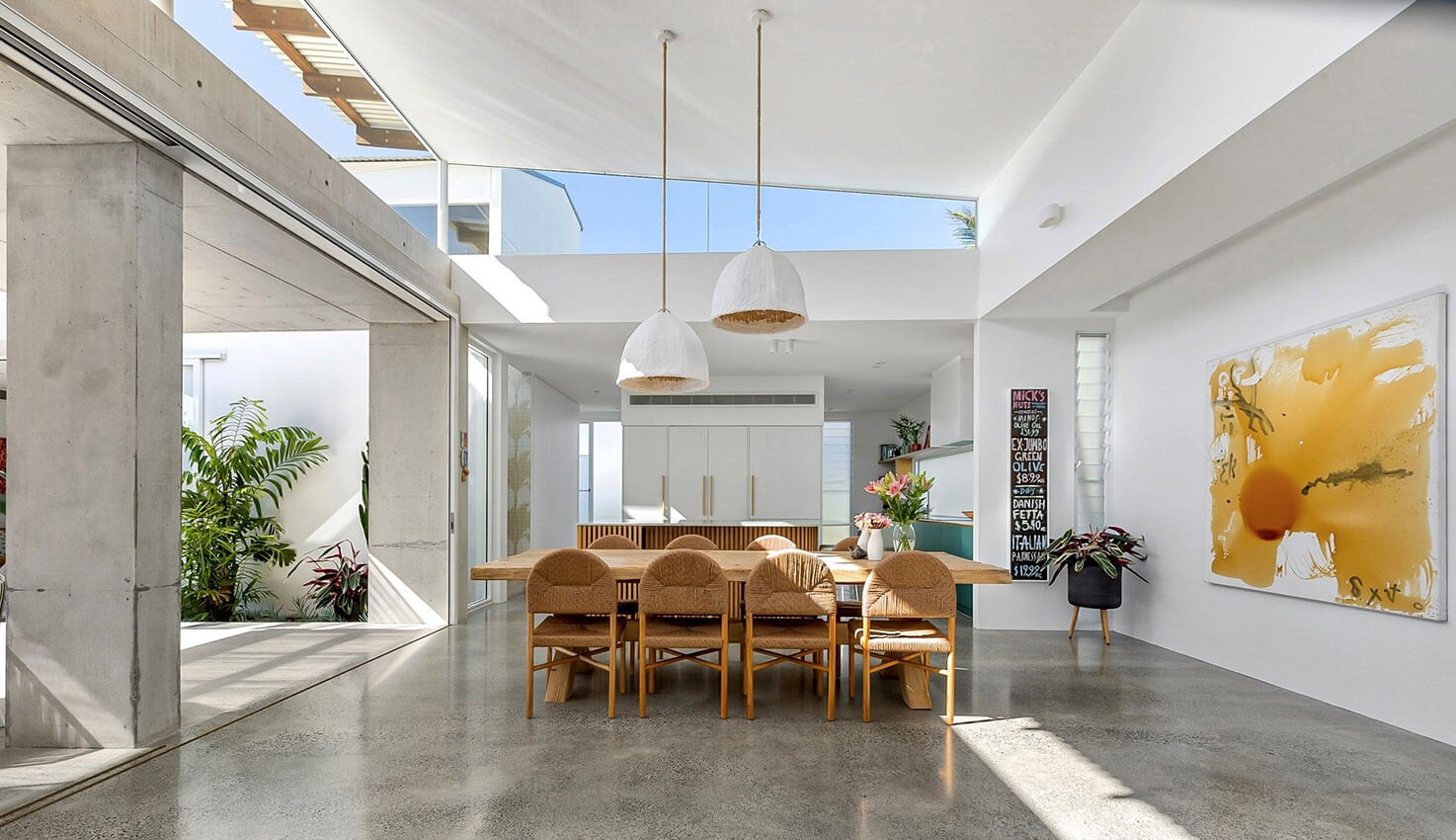
Nannygai Street house is an exercise in responsonse to place, restraint and the function for the active lifestyle of our clients.
The building has adaptability with a seperate guest studio to cater for guests or longer term visitors.
The U shaped in plan provides a private green court for the occupants and a pleasant out look from all rooms.
The upper bedrooms take advantage of the northern aspect. The timber battened screen has operable panels that were designed using local stainless steel yacht rigging, negating the use for electrical devices.
Landscsaping was an important consideration, allowing for no need for a front fence to the street.The building is designed to improve with time, with the use of timber, large openings and planned vegetation.
The house and court have been elevated to a level to avoid any inundation of 100 year flood pedictions.
Solar panels and water harvestaion have been employed.
Onesurf Residence | Blueprint Architects pty ltd
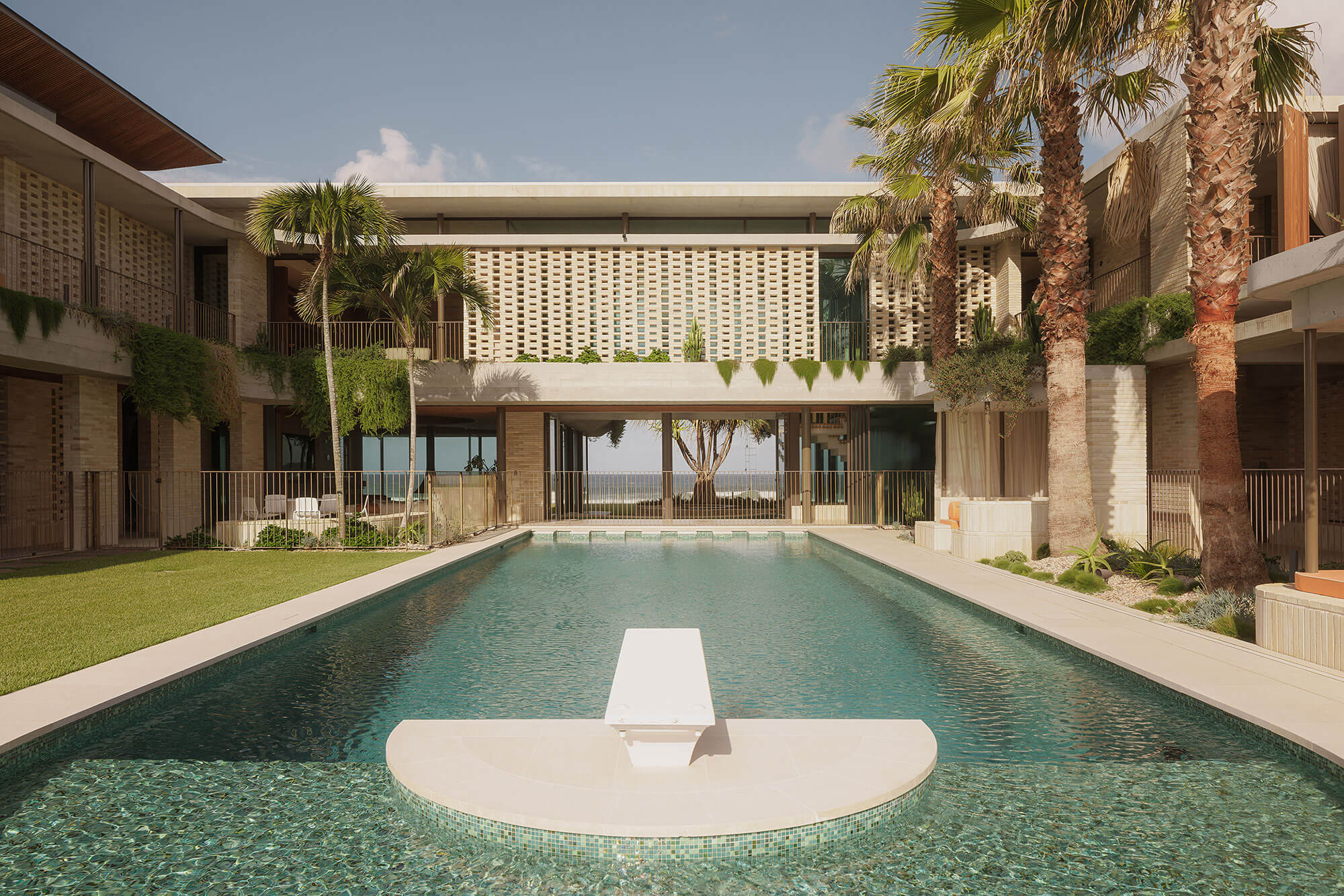
Conceptualised as a robust beach shack, the built form of Onesurf Residence was designed to have sense of strength to combat the harsh oceanfront environment, be enduring, be connected to its place and age beyond the lifespan of neighbouring contemporary structures.
The residential program is based around a private internal quadrangle with its edges occupied to take advantage of the sites beachfront location. Open ocean views are predominantly to the east and southeast, with a view of Surfers Paradise at the beachfront. Locating the rooms at the edges allows the internal court to connect with outlooks while taking advantage of breezes and has resulted in the home preserving a strong relationship with its surroundings. Brick veils, timber casements and a half level difference to frontages affords the occupants of the house internal privacy whilst maintaining a strong sense of connectivity and permeability with the public domain.
PALA Residence | Studio Snell

PALA is a highly considered and warm family home. PALA is also a statement of intent by the owners, who are local builders, about raising the expectations and standards of architecture and build quality in the suburb, and the Gold Coast generally.
Studio Snell were engaged by Havendeen Projects to conceive a building which brought construction technologies and standards of finish not often manifested in the area. The building also functions as a pragmatic and uplifting home for a young growing family.
PALA has been designed with longevity in mind with concrete construction including precast panel walls and expressed steel elements. The aesthetics of the building are cohesive inside and out with a focus on natural and substantial materiality to support the strong and expressed structure of the building. Narrative and occasional whimsy are introduced through sculptural forms and unexpected dark vs light expressions in tectonics and joinery.
Sjøhavn House | Lightbody Architects
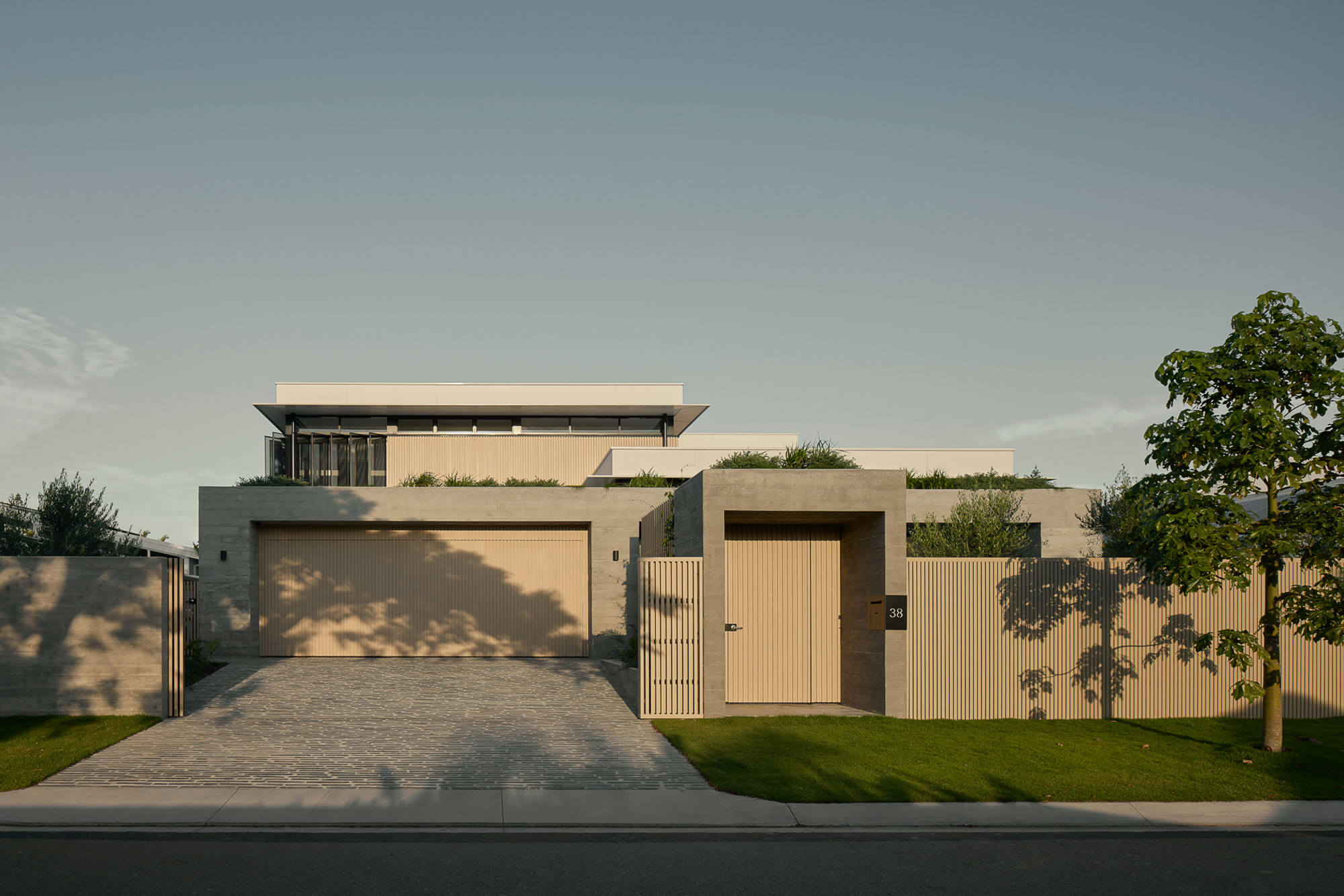
The client’s design brief formulated the overall program for the house.
Interpreting the individual functional spaces as simple volumes, the design also became about what happened where spaces overlapped, and spaces in between could be occupied.
Understanding the client’s design brief provided the overall functionality of core spaces within the house.
These primary spaces were expressed as simple, extruded volumes that created an opportunity for exploring the smaller in-between or overlapping spaces as a result. These smaller Interstitial areas created a sequence of threshold spaces that provide connectivity to the primary areas along with areas for occupants to retreat and seek privacy away from activity.
The minimalist palette of materials creates a sense of cohesiveness of these interstitial and primary spaces while strengthening the seamless connection between the internal and external program of this family home.