18th International Architecture Exhibition, La Biennale di Venezia
On behalf of the 2023 Venice Biennale Committee, I am delighted to invite Expressions of Interest for Creative Directorship at the 18th International Architecture Exhibition, La Biennale Di Venezia. The Australian Institute of Architects has a strong affiliation with this world-renowned Exhibition, and we are excited to once again showcase the very best of the Australian design community in Venice, Italy.
The theme for the 18th La Biennale Di Venezia, The Laboratory of the Future, allows Creative Directors to interpret broad guidelines that encourage ingenuity and imagination.
Involvement in La Biennale Di Venezia provides an opportunity for Members of The Institute, to exhibit on a world-stage amongst a cohort of international colleagues. This is a highly coveted professional development opportunity and I encourage you to consider your application to participate as the 2023 La Biennale Di Venezia Creative Director.
Further information including past winners and detailed entry requirements can be viewed here.
Tony Giannone
Chair of the Venice Biennale Committee
Immediate Past National President Australian Institute of Architects
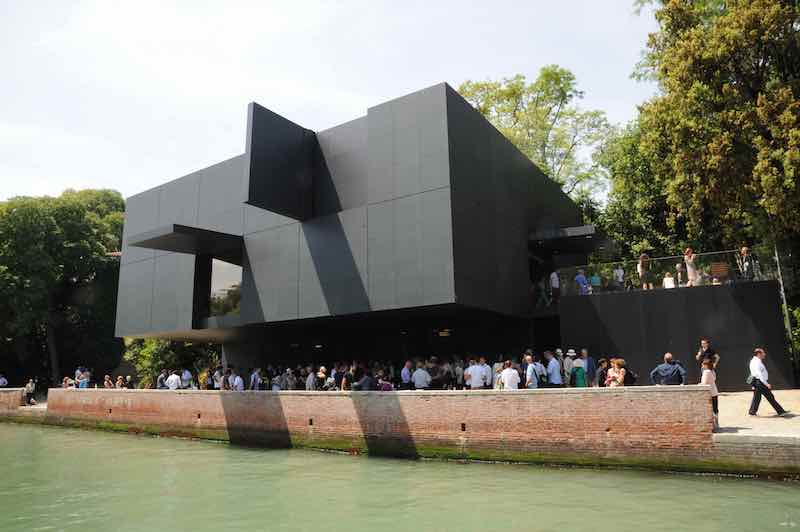
2016 National Architecture Awards | Australia Pavilion | Denton Corker Marshall | Photographer: John Gollings
Presenting Inbetween: Australia’s exhibition for the 17th Venice Architecture Biennale
Inbetween explores cultural connection in the built environment
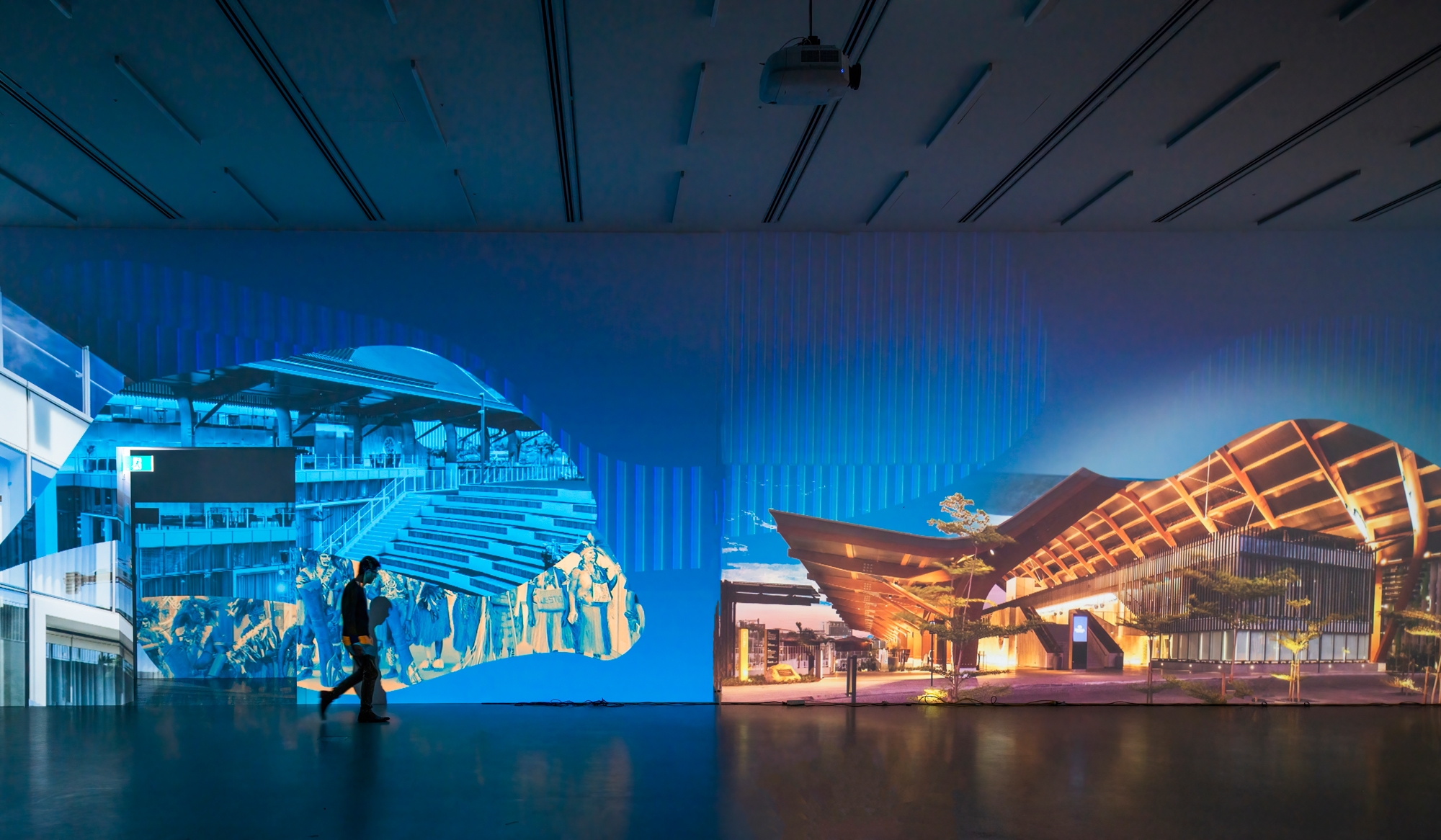
The Australian exhibition for the 17th Venice Architecture Biennale has been exhibited locally for the first time since Australia opened its pavilion in Venice in 1988. Curated by Jefa Greenaway and Tristan Wong, Inbetween presents a collection of architectural projects and processes selected for their powerful representation of Indigenous and First Nations peoples and cultures; projects that enable cross cultural exchange and highlight the value of Indigenous knowledge for improving the built environment.
Navigating the limitations of current border restrictions, Inbetween has been reimagined as an immersive, large scale and suitably beautiful video piece. “What we’re looking at through the exhibition is how architects, both non-indigenous and Indigenous, are working with First Nations peoples – traditional owners, knowledge keepers and elders – as a way of embedding cultural authenticity into our built environment.” explains Jefa. “Beyond that, we’re opening up a conversation around some of the shared challenges we’re facing in our broader Pacific region and pointing to the fact that when finding ways to connect with Indigenous culture, we don’t operate in a vacuum.”
18th International Architecture Exhibition, La Biennale di Venezia
The Biennale is one of the oldest and most prestigious international exhibitions of architecture, showcasing leaders in contemporary design and architecture from around the world.
The Biennale is a unique opportunity to reach non- traditional and underserved audiences. The Institute, through its Venice Biennale Committee, aims to engage these audiences in Venice and through local outreach activities associated with the exhibition.
The exhibition open to the public 20 May – 26 November 2023
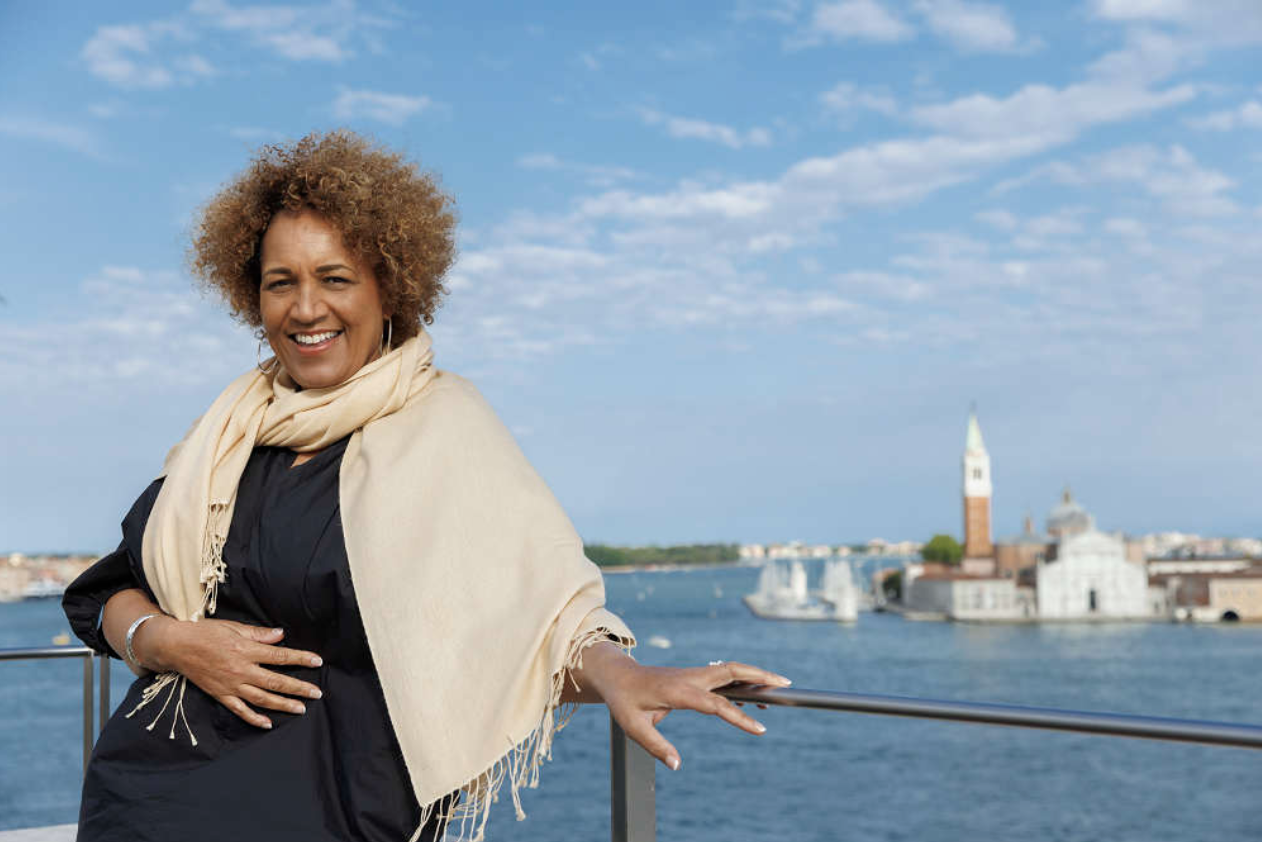
The President of La Biennale di Venezia, Roberto Cicutto, and the Curator of the 18th International Architecture Exhibition, Lesley Lokko announced on 30 May, 2022 the title and theme of the Biennale Architettura 2023 is, The Laboratory of the Future.
Lesley Lokko, said that La Biennale di Venezia itself is a kind of laboratory of the future, a time and space in which speculations about the [architectural] discipline’s relevance to this world — and the world to come — take place.
She said “we envisage our exhibition as a kind of workshop, a laboratory where architects and practitioners across an expanded field of creative disciplines draw out examples from their contemporary practices that chart a path for the audience — participants and visitors alike — to weave through, imagining for themselves what the future can hold.
Lesley Lokko | Courtesy of La Biennale di Venezia | Photographer: Jacopo Salvi
2023 Australian exhibition concept
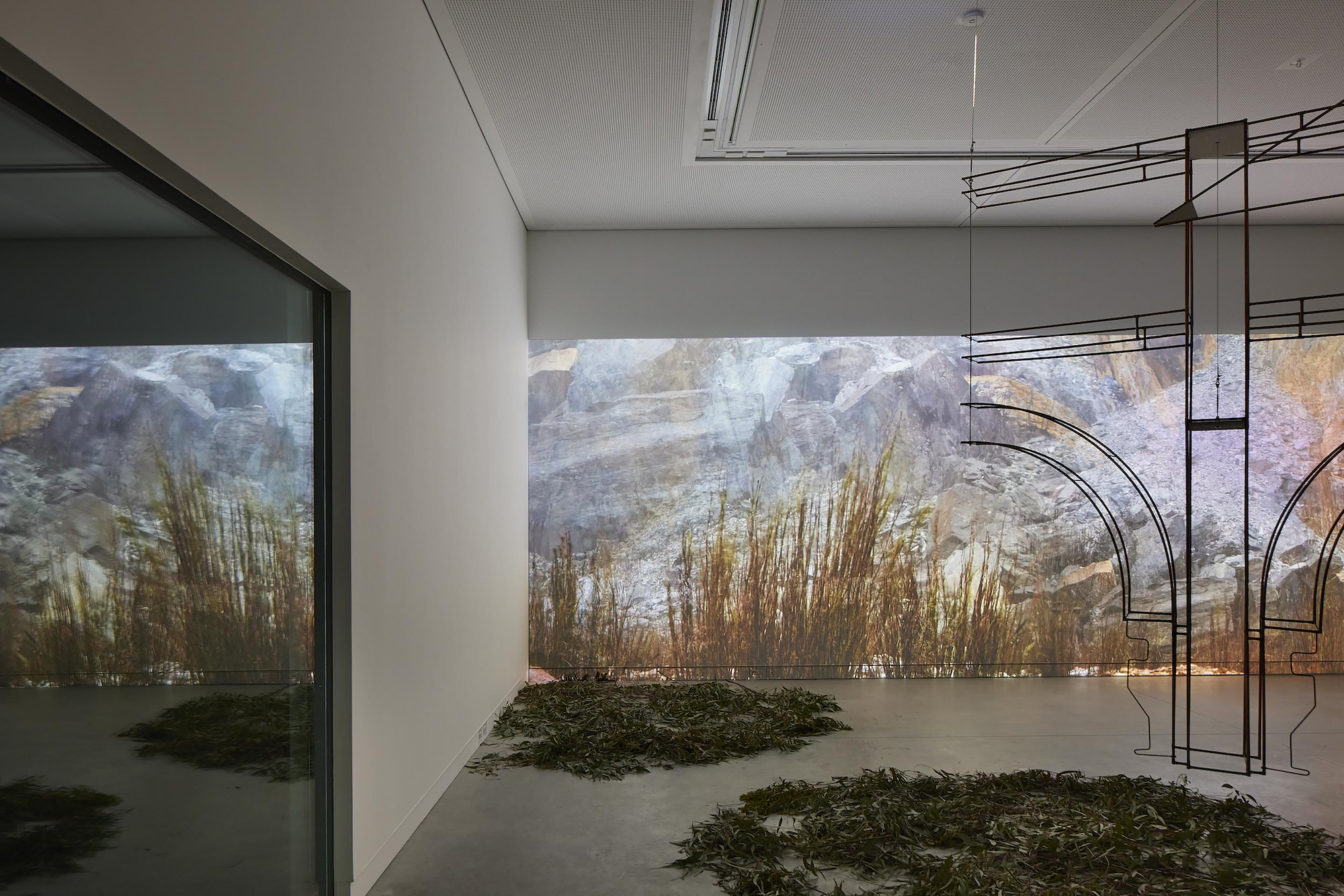
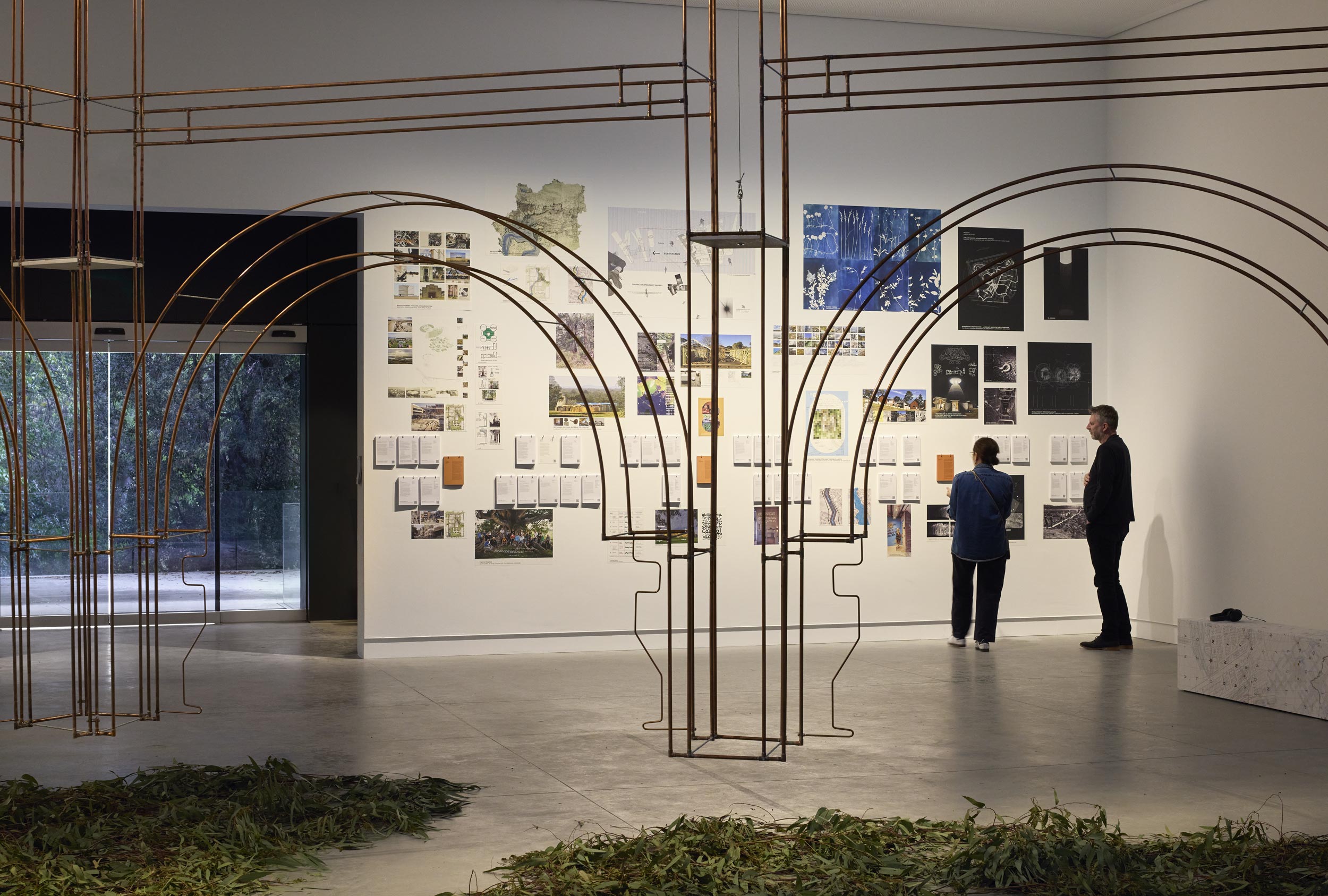
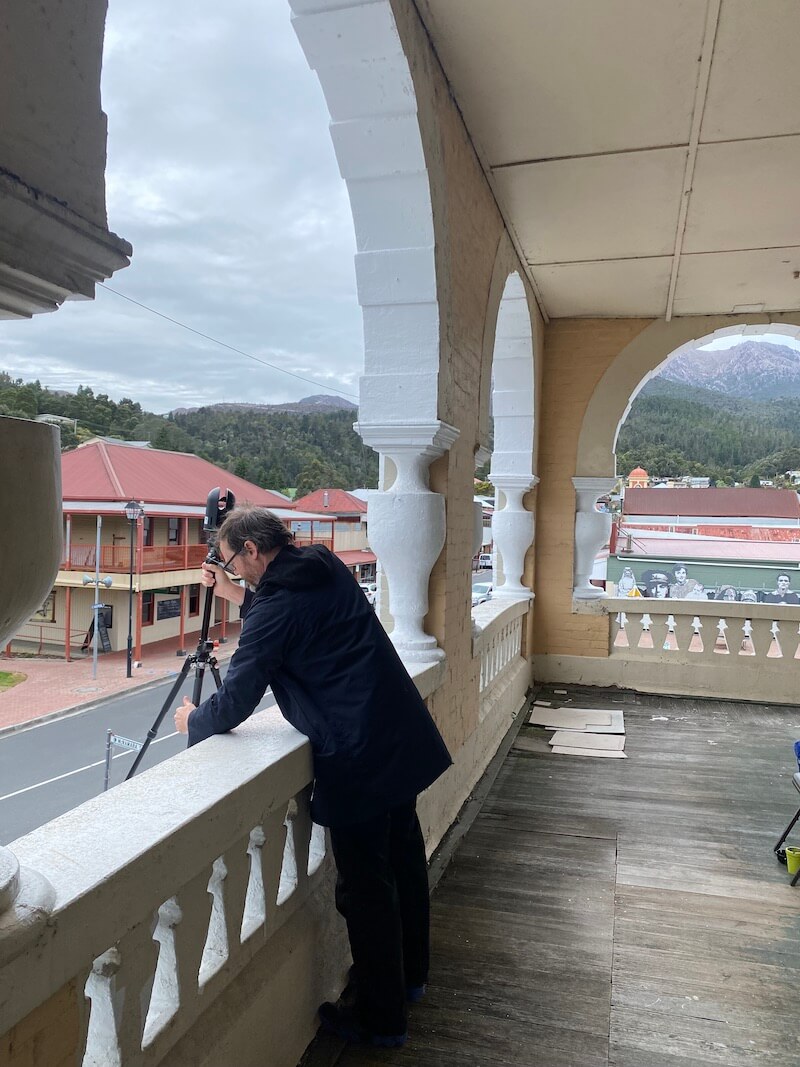
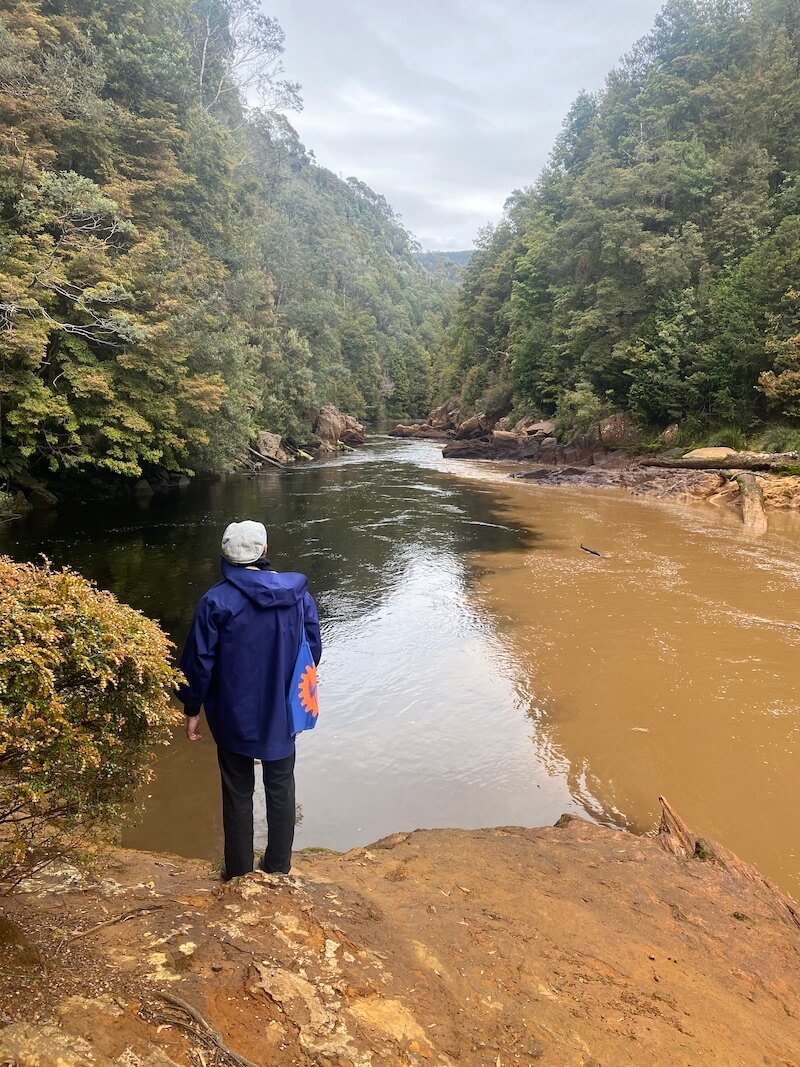
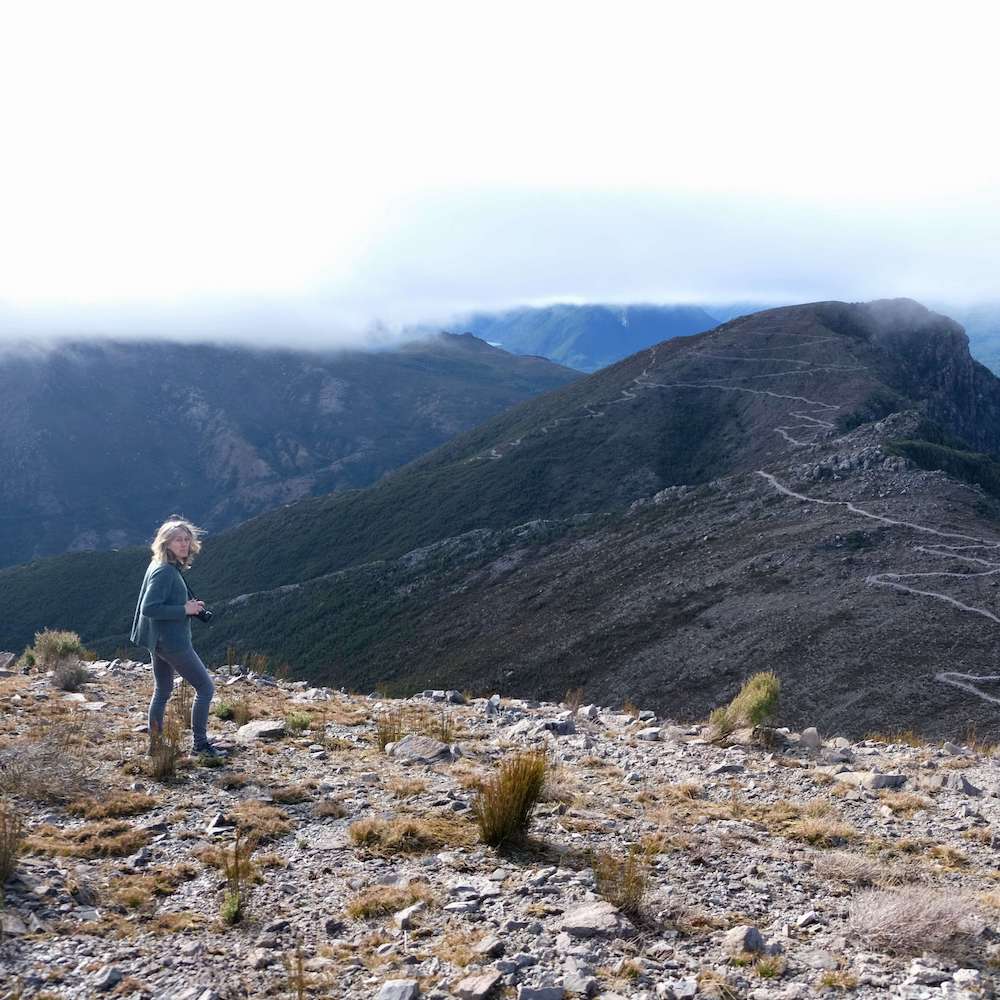
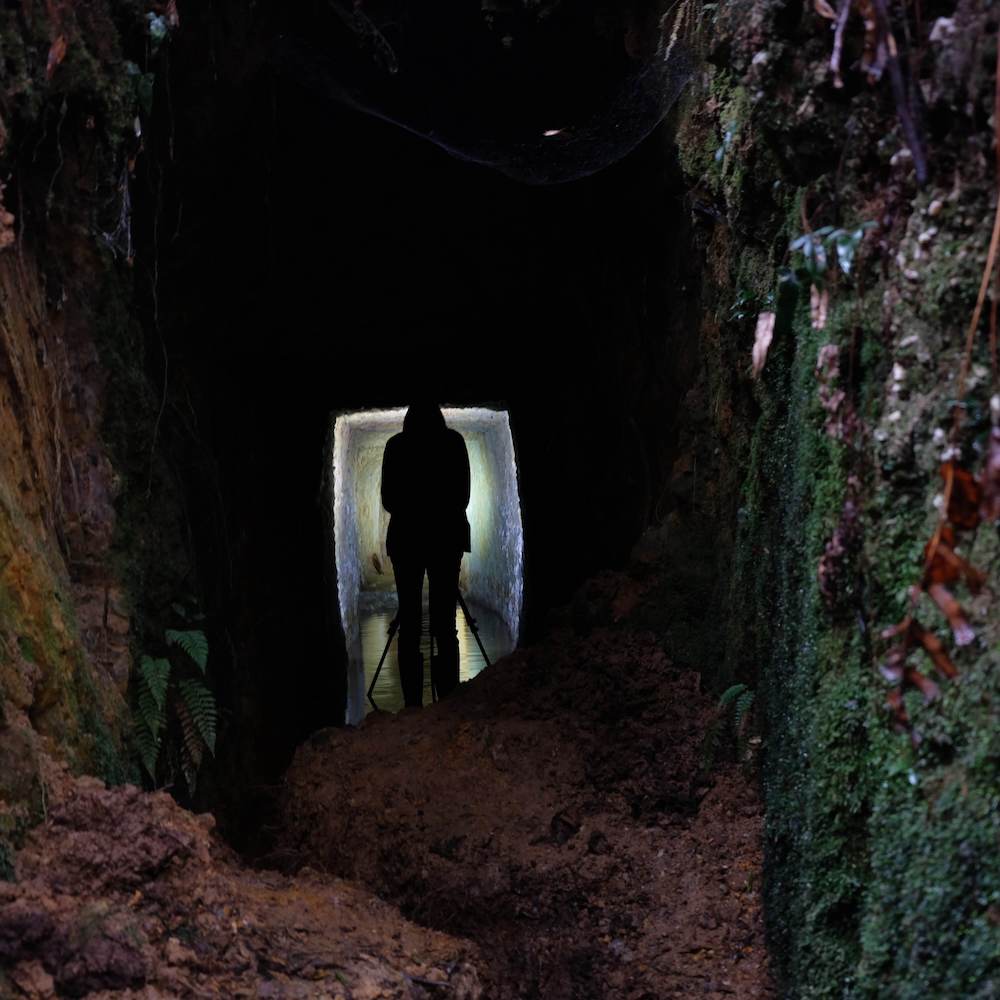
unsettling queenstown
The fabric of Australian colonial identity, is woven between the warp of distant elsewheres and the weft of close familiars. Its foundation lies in this separation, and its historical unfolding is the slow process of reconciling this original displacement. For First Nations peoples, displacement is the violent dispossession of ancestral lands; for the colonial settler and migrant, displacement stems from trajectories of flight or pursuit. For both, that which was once whole has been divided and separated. Over generations, this separation becomes naturalised, unquestioned, apparently inevitable. Decolonisation involves the unsettling of this stasis, a disruption of a rupture, in order ultimately to heal the original rift and rejoin that which has been divided.
unsettling Queenstown | Photographer: Tom Roe
unsettling QUEENSTOWN engages the question of the relations between people and the environment under logics of colonialism and resource extraction, through the lens of a place in which these are brought into sharp focus. The denuded mountains, polluted river, and abandoned buildings of Queenstown speak of the environmental and social costs of an extractive approach to the environment. Yet today, there is a fresh influx of people to Queenstown, drawn by the dark magnetism of its landscape and history, and the unconformity of its growing arts community. A place in which the traumas of the past are transmuted to the energies of the future, as Queenstown unsettles itself, it points to a broader unsettling of our stabilised patterns and understandings.
Anthony Coupe co-founded the practice Mulloway Studio, after spending time in Mexico, developing interconnected sustainability projects that supported Lacandon Mayan communities in the southern rainforest. Although the practice now operates closer to home, undertaking community projects across the country and across different disciplines, the work retains Anthony’s commitment to its social justice underpinnings and the interrelationship between environmental and cultural sustainability.
Growing up on the other side of the world contributed to Anthony possessing both a sense of ‘otherness’ and a sense of curiosity about places and their stories. He is excited to create an exhibition that has resonance; one that has interesting experiential presence but that can also add to the conversation across contemporary practice. Anthony has a particular interest in creating spatial experiences that are anchored by a strong narrative that use metaphors and clues and challenge the audience to participate and create their own story.
A former National Vice President of Australia ICOMOS, and is the Immediate Past President of the South Australian chapter of the Australian Institute of Architects, Anthony is undertaking a PhD by practice in spatial storytelling. His research around representation, and his previous experience exhibiting at La Biennale provide a good foundation for his co-Creative Directorship in unsettling Queenstown.
Emily Paech
Project Lead Interpretation + Urban Environments, Mulloway Studio
Emily Paech is a senior designer at Mulloway Studio with a special interest in master planning, urban design, exhibitions and academia. Emily is driven by a desire to create places that are sensitive to their context, that reflect community aspirations and engage Place and Country. Her involvement in the Biennale was piqued on reading Lesley Lokko’s theme Laboratory of the Future and its linkage to Australia’s blooming cultural shift.
Emily was central to the formation of the unsettling Queenstown team, and as a designer has taken on design, fabrication and coordination roles. She says the emerging exhibition is inspirational, evocative and is a representation of the diversity of contemporary architectural practice and thinking. For Emily, the 2023 Venice Biennale presented itself as a wonderful way to disseminate design research into architectural practice and theory around decolonisation.
Outside of unsettling Queenstown, and her general design practice, Emily is equally as comfortable wielding a jack-hammer or secateurs as she is with a 0.4 felt tip or spreadsheet. She credits her management skills to her diverse portfolio of responsibilities – both inside and outside of the working day, and is looking forward to the upcoming raft of exciting future challenges.
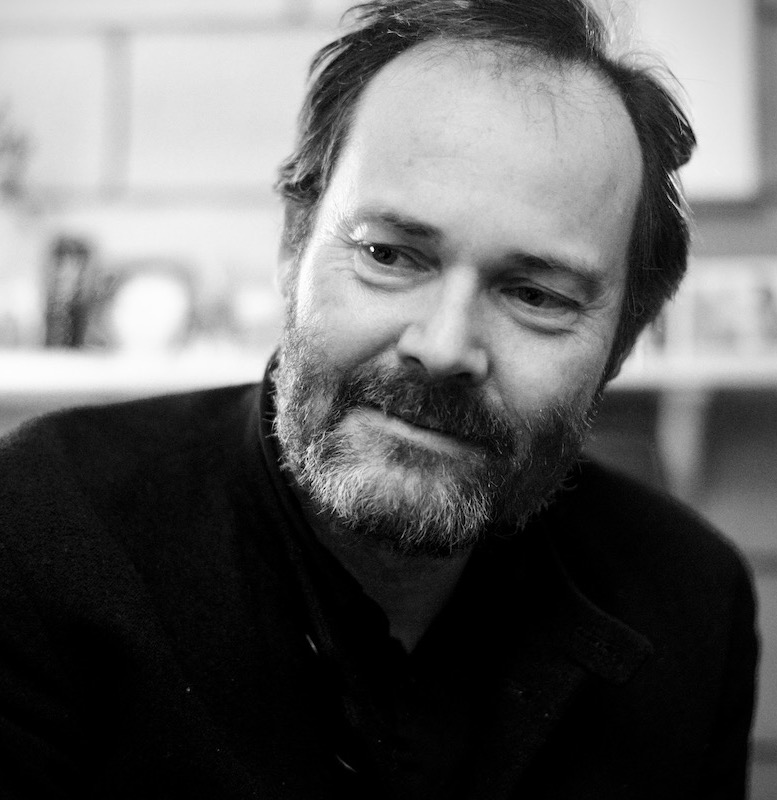
Dr Julian Worrall
Professor of Architecture at the University of Tasmania, Dr Julian Worrall is an Australian architect and scholar whose career spans both the profession and the discipline. An early inspiration came – appropriately enough – from his youthful travels in Italy, with Peter Greenaway’s film “Belly of an Architect” crystallising a pivot from physics to architecture. In both creative and scholarly work, he has pursued a multi-faceted inquiry into ‘alternative modernities’ in architecture and urbanism, nourished by a long and deep engagement with Japan.
This interest resonated with the themes of decolonisation and decarbonisation in Lesley Lokko’s framing of the 2023 Venice Biennale as The Laboratory of the Future, which took shape in the curatorial vision for unsettling Queenstown. He is most excited about the reflection that the exhibition will provoke from its audience, in “the specific rub of ideas and images that it yields”.
Julian’s previous contributions to major international exhibitions and institutions, including La Biennale (Venice); MoMA (New York); V&A Museum (London); MAK (Vienna); Strelka (Moscow); and Festa (Christchurch), make him an ideal Curator for the 2023 Venice Biennale exhibition.
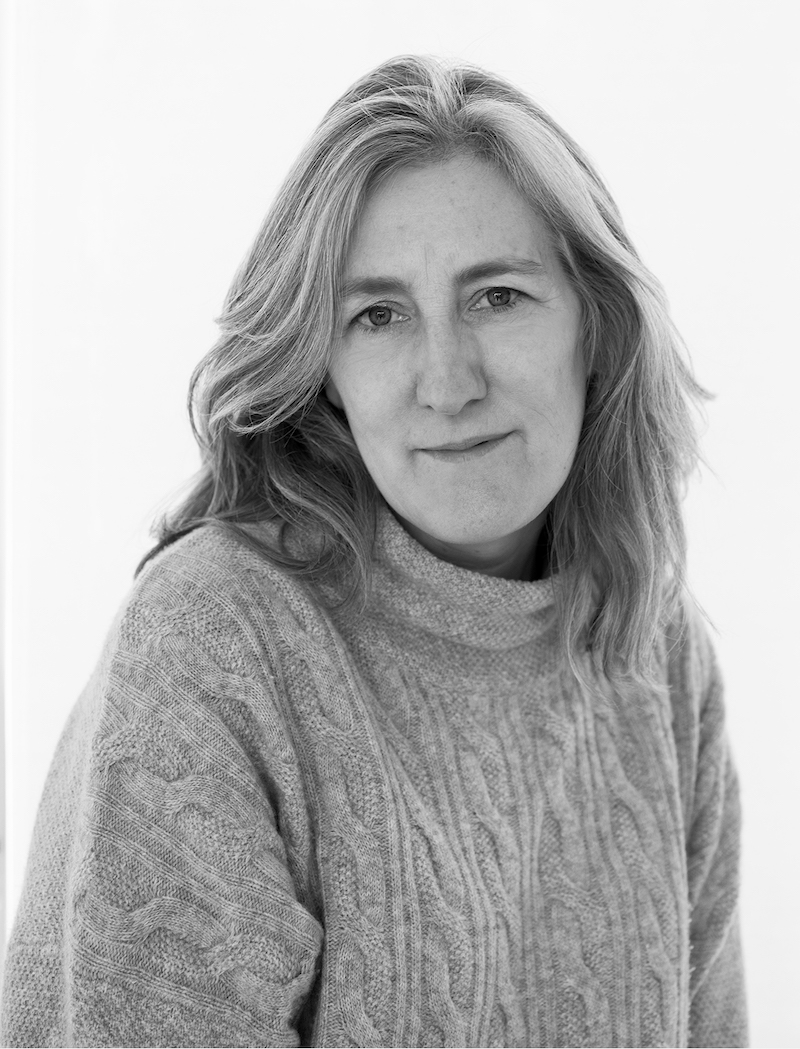
Dr Sarah RhodEs
Photographic Artist
Sarah Rhodes is a photographic artist who uses a post-documentary practice to explore how the natural environment shapes one’s inner world.
Living and working on the island of lutruwita (Tasmania), her focus is on the indivisibility of person and place and key themes of isolation and connection, self-containment, and belonging. Her PhD research on the parallel between the emotional and geographical self, and the focus on Queenstown, has made a valuable contribution to the #unsettlingQUEENSTOWN exhibition.
Sarah will showcase a series of video works at La Biennale that will evoke the psychological and emotional experience of being in place.
2023 Creative Director TEAM
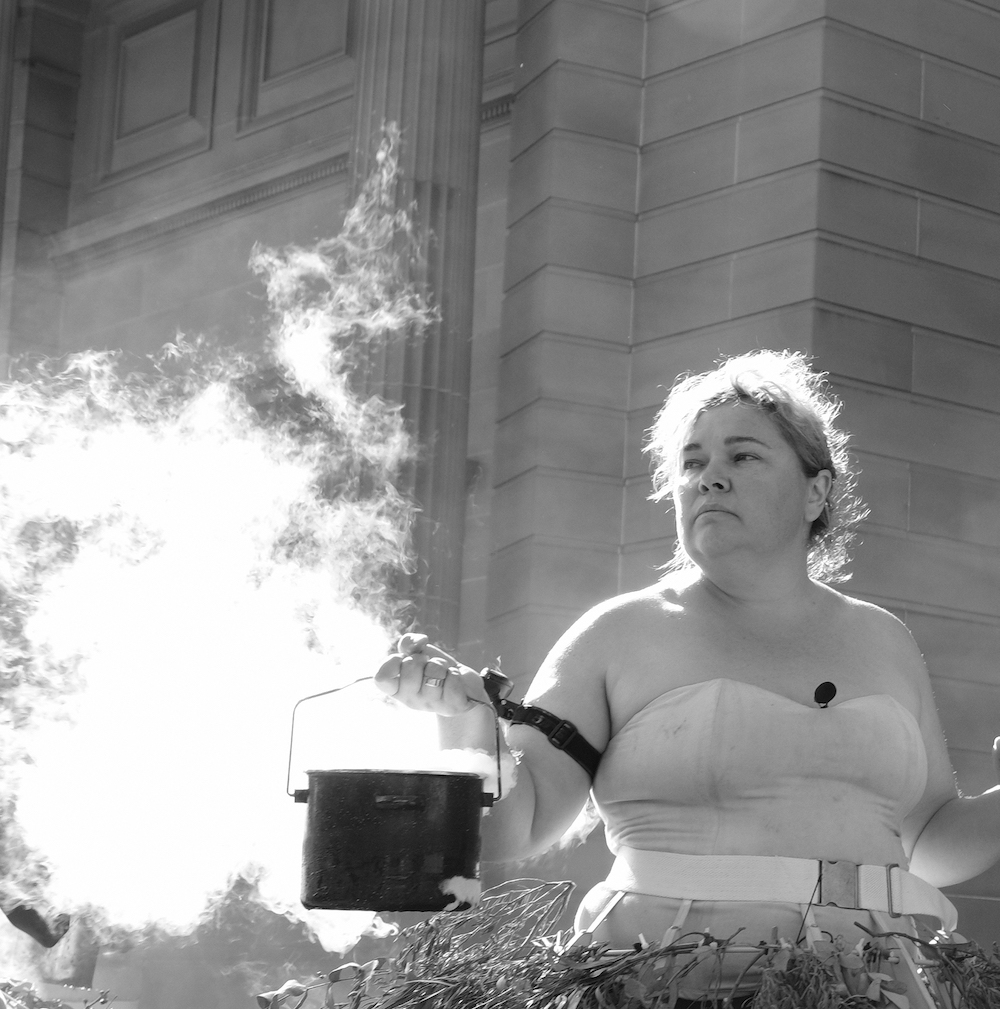
Assoc Prof Ali Gumillya Baker
Associate Professor Indigenous and Australian Studies, Flinders University. Unbound Collective
ASSOC PROF ALI GUMILLYA BAKER
Ali Gumillya Baker is a Mirning person whose family are from the West Coast of South Australia, she is an Associate Professor at Flinders University and a multidisciplinary artist who is a member of the Unbound Collective a group of First Nations artist academics. She is a both a renowned South Australian artist and a highly regarded academic in the cultural studies related to First Nations peoples. She has a Bachelor of Visual Arts (Honours), University of South Australia, 1997, Master of Arts (Screen Studies), Flinders University, 2002, and a PhD (Cultural Studies, Creative Arts), College of Humanities Arts and Social Sciences, Flinders University 2018.
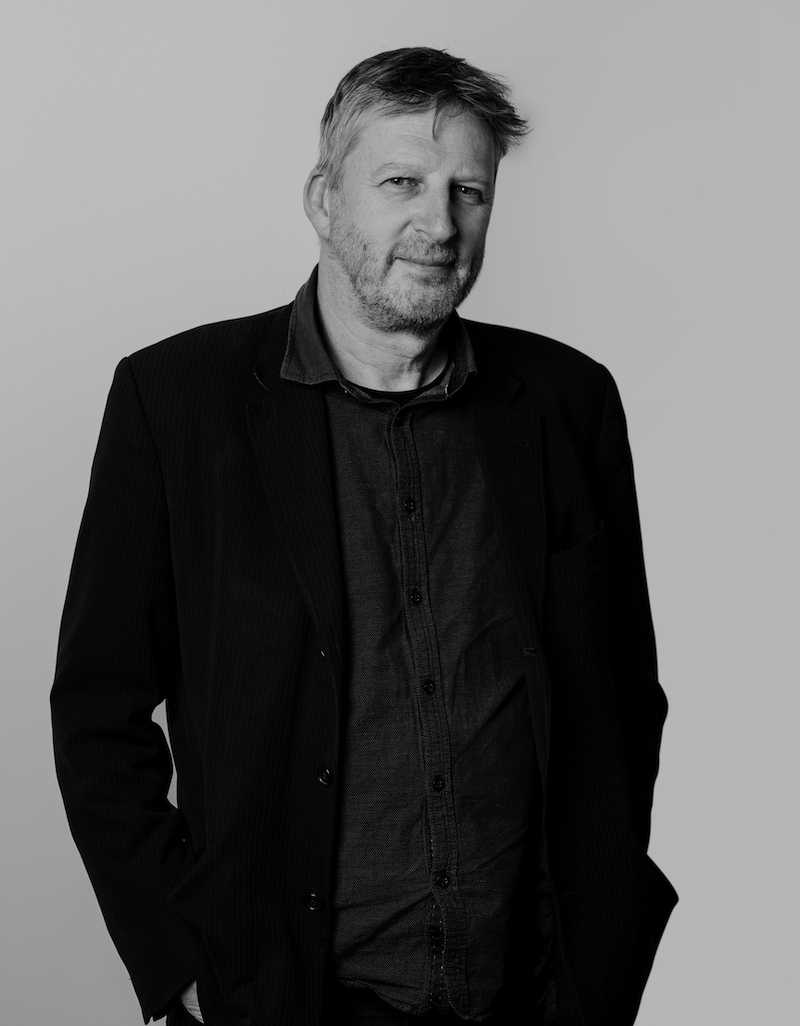
A founding director of Mulloway Studio, Anthony’s interest lies in the intersection between cultural narratives and architectural expression. His practice encompasses a range of typologies including urban design, architecture and exhibitions where the design process is underpinned by story-telling and social responsibility. Many Mulloway projects have been recognised for their contribution to cultural heritage, urban design and architecture, including the Harts Mill projects and the No1 Pump Station – recognised at national and international levels. Anthony has given papers at international conferences and exhibited at the Venice Biennale in 2014. He is a former National Vice President of Australia ICOMOS, and is currently the President of the South Australian chapter of the Australian Institute of Architects, while undertaking a PhD by practice.
A founding director of Mulloway Studio, Anthony’s interest lies in the intersection between cultural narratives and architectural expression. His practice encompasses a range of typologies including urban design, architecture and exhibitions where the design process is underpinned by story-telling and social responsibility. Many Mulloway projects have been recognised for their contribution to cultural heritage, urban design and architecture, including the Harts Mill projects and the No1 Pump Station – recognised at national and international levels. Anthony has given papers at international conferences and exhibited at the Venice Biennale in 2014. He is a former National Vice President of Australia ICOMOS, and is currently the President of the South Australian chapter of the Australian Institute of Architects, while undertaking a PhD by practice.
A founding director of Mulloway Studio, Anthony’s interest lies in the intersection between cultural narratives and architectural expression. His practice encompasses a range of typologies including urban design, architecture and exhibitions where the design process is underpinned by story-telling and social responsibility. Many Mulloway projects have been recognised for their contribution to cultural heritage, urban design and architecture, including the Harts Mill projects and the No1 Pump Station – recognised at national and international levels. Anthony has given papers at international conferences and exhibited at the Venice Biennale in 2014. He is a former National Vice President of Australia ICOMOS, and is currently the President of the South Australian chapter of the Australian Institute of Architects, while undertaking a PhD by practice.
Professor of Architecture, Head of School School of Architecture and Design, University of Tasmania
Prof Julian Worrall
Professor of Architecture at the University of Tasmania, Dr Julian Worrall is an Australian architect and scholar whose career spans both the profession and the discipline. An early inspiration came – appropriately enough – from his youthful travels in Italy, with Peter Greenaway’s film “Belly of an Architect” crystallising a pivot from physics to architecture. In both creative and scholarly work, he has pursued a multi-faceted inquiry into ‘alternative modernities’ in architecture and urbanism, nourished by a long and deep engagement with Japan.
This interest resonated with the themes of decolonisation and decarbonisation in Lesley Lokko’s framing of the 2023 Venice Biennale as The Laboratory of the Future, which took shape in the curatorial vision for unsettling Queenstown. He is most excited about the reflection that the exhibition will provoke from its audience, in “the specific rub of ideas and images that it yields”.
Julian’s previous contributions to major international exhibitions and institutions, including La Biennale (Venice); MoMA (New York); V&A Museum (London); MAK (Vienna); Strelka (Moscow); and Festa (Christchurch), make him an ideal Curator for the 2023 Venice Biennale exhibition.
Sarah Rhodes is a photographic artist using a post-documentary practice to explore ways in which thenaturalenvironment shapesone’sinner world.
Living and working on the island of lutruwita (Tasmania), her focus is on the indivisibility of person and place and key themes of isolation and connection, self-containment, and belonging. Her PhD research on the parallel between the emotional and geographical self, and the focus on Queenstown, has made a valuable contribution to the #unsettlingQUEENSTOWN exhibition.
Sarahwillshowcase a series of video works at La Biennale that will evoke the psychological and emotional experience of being in place.
Associate Professor Indigenous and Australian Studies, Flinders University. Unbound Collective
ASSOC PROF ALI GUMILLYA BAKER
Ali Gumillya Baker is a Mirning person whose family are from the West Coast of South Australia, she is an Associate Professor at Flinders University and a multidisciplinary artist who is a member of the Unbound Collective a group of First Nations artist academics. She is a both a renowned South Australian artist and a highly regarded academic in the cultural studies related to First Nations peoples. She has a Bachelor of Visual Arts (Honours), University of South Australia, 1997, Master of Arts (Screen Studies), Flinders University, 2002, and a PhD (Cultural Studies, Creative Arts), College of Humanities Arts and Social Sciences, Flinders University 2018.
Project Lead Interpretation + Urban Environments, Mulloway Studio
EMILY PAECH
Practicing architecture, interpretation, masterplanning, urban design, alongside teaching roles, Emily is driven by a desire to create sensitive,earnest places that reflect community aspirations. A great communicator, she engages with users and occupiers to champion meaningful experiences and thoughtful responses. With significant experience in delivering exhibition projects Emily has a nuanced appreciation of technical, budgetary and delivery requirements.
A founding director of Mulloway Studio, Anthony’s interest lies in the intersection between cultural narratives and architectural expression. His practice encompasses a range of typologies including urban design, architecture and exhibitions where the design process is underpinned by story-telling and social responsibility. Many Mulloway projects have been recognised for their contribution to cultural heritage, urban design and architecture, including the Harts Mill projects and the No1 Pump Station – recognised at national and international levels. Anthony has given papers at international conferences and exhibited at the Venice Biennale in 2014. He is a former National Vice President of Australia ICOMOS, and is currently the President of the South Australian chapter of the Australian Institute of Architects, while undertaking a PhD by practice.
Expressions of Interest for Creative Director’s have closed.
The Creative Director’s role is solely focused on the curation of the Exhibition, with the formal, social and operational aspects being the responsibility of the Institute management team.
The exhibition is required to reflect the overall 2023 Venice Biennale theme and showcases Australian architectural thinking, culture and design, communicating a rich and engaging story about architecture and the Australian built environment to an international audience.
For 2023, the Venice Biennale Committee seeks a powerful idea that reveals what is particular, but also prescient, about Australian architecture. A successful concept will be captivating, thought-provoking and inspirational. Consideration should also be given to the curated exhibition’s journey post-Venice and its adaptability to tour nationally across Australia once the exhibition closes in Venice.
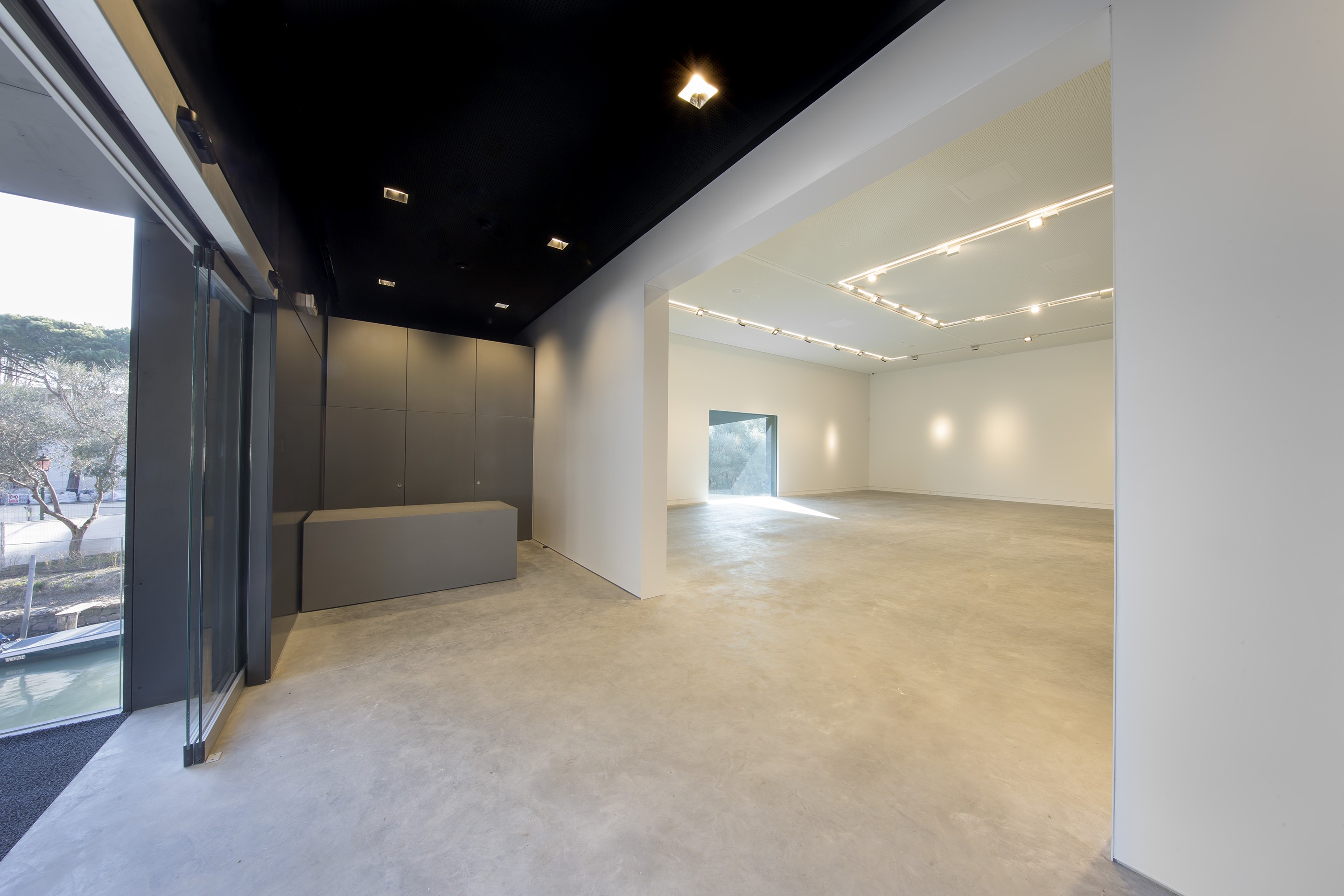
Australia Pavilion | Denton Corker Marshall | Photographer: Stephen Varady
SUBMISSION REQUIREMENTS
STAGE 1 REQUIREMENTS
Submissions will present an exhibition theme, idea and concept, as well the capability and skills of the Creative Directors.
A maximum five A4 pages (single-sided), 11-point font size submission is required as described below. The submission is to include the following:
Concept Proposal (3 pages max):
Outline the concept proposal (including any diagrams, graphics, imagery), responding to each of the selection criteria.
Nominate a ‘working title’ concept name.
Nominated Creative Team (1 page max):
Outline the creative team members including Creative Director/s and any other proposed team members.
For each team member, provide their current position, employment and contact details (telephone, email and postal address). No CVs or biographies are required at this stage.
Nominate the Creative Director contact person representing the team as the primary contact.
Nominate the names of the Creative Directors, noting that the Institute may publish shortlisted entries using the names provided.
Statement of Experience and Capability (1 page max):
Outline the Creative Directors’ experience and skills relevant to delivering the exhibition. Reference may be made to project design, curation and management capability. Submissions should also demonstrate success in meeting tight timeframes within defined budgets.
At this stage, the Institute DOES NOT require or expect to see artistic impressions, models, scale drawings or detailed proposals.
SUBMISSION FORMAT
Your submission needs to be in PDF format, maximum of five A4 pages.
Australia Pavilion | Denton Corker Marshall | Photographer: Stephen Varady
Volunteer at 2023 Venice Biennale
Australia Pavilion | Denton Corker Marshall | Photographer: Stephen Varady
Volunteer in Venice
The Institute invites expressions of interest from students and members that would like to volunteer at the Australia Pavilion at the 18th Venice Biennale.
Whilst the 2023 exhibition will be invigilated by full-time, on-the-ground staff, our Venice team welcome volunteers who wish to gain experience in international invigilation. If you plan on visiting Venice between 20 May 20 and 26 November 2023, and would like to know more about how you can get involved, please express your interest by completing the form below.
Please note: this is an unpaid, volunteer opportunity. All applicants are required to complete an application form and provide references. Selection of volunteers is at the discretion of the Institute and the unsettling Queenstown team.
Originally conceived for exhibition at the subsequently postponed 2020 iteration of the Biennale in Venice, Inbetween looks beyond Australia’s borders and invites the neighbouring nations of the Pacific to join the exhibition, leveraging Australia’s fortunate position as one of only 29 countries with a permanent pavilion to platform architecture and cultures that may have less international exposure. The film brings together 20 projects from across Australia, Micronesia, Melanesia and Polynesia to amplify the important role architecture can play in retaining and rediscovering lost cultural knowledge.
Tristan said: “We’re privileged to be one of the few countries that have a pavilion in the Giardini in Venice so in the context of this year’s overarching Biennale theme, which asks “How will we live together?”, we thought of sharing our platform with countries whose architecture and cultures have much less exposure as a way of breaking down that privilege. This ended up being a way of reaching beyond our shores to embrace people and cultures who have a shared experience and created a much richer exhibition.”
Showcasing projects from remote, regional, and metropolitan locations – every drawing, photograph or snippet of footage collated in the film offers insight into how architects are creating new protocols for better design outcomes through meaningful co-design processes. “Architects understand the value of engaging with deeper connections to Country. Inbetween explores different approaches, across a variety of architectural typologies and scales, but they are all working to a shared agenda. There’s a consistency of thinking and an attitude that shows we’re reaching a level of cultural maturity within the built environment disciplines where we can begin to enable cultural collaboration and exchange.” reflects Jefa.
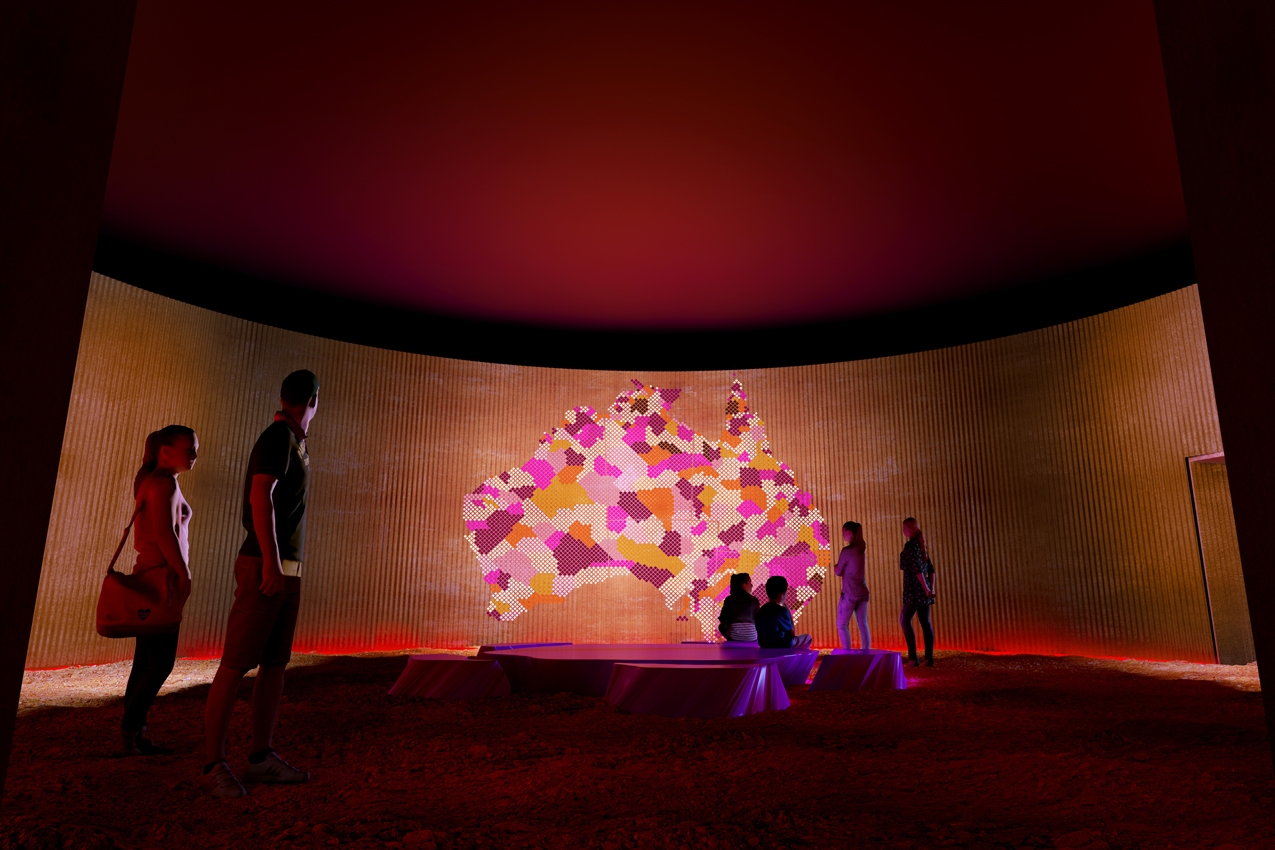
2021 Inbetween Exhibit | Indigenous Languages Map
Watch the 2021 Inbetween Premier
Inbetween premiered on Thursday 20 May, and will be exhibited this year throughout Australia, across the Pacific region and more broadly, as well as online. “Not being tied to the space in Venice has meant that we’ve been able to create something that can be experienced by a much larger audience. The great thing about the new format is that essentially anyone can access it and it has longevity beyond the dates of the Biennale.” explains Tristan. “This project isn’t a collection of artefacts; it’s forward looking and presents the innovative potential in learning from Indigenous methods and ideas. Embedding practices and knowledge that has been around for more than 60000 years into the way we design buildings creates opportunities for a new kind of architecture that is better for people, cities and the environment.”
“We always wanted to invite people on a journey. The film creates an immersive experience that engages the senses so it’s not simply about the visuals but also the connection to soundscapes and the hearing of language, creating a visceral connection to Country. In the international realm there are still stereotypes around how people understand Australia so we wanted to demonstrate richness and diversity – the different contexts and landscapes that exist in Australia, and more broadly in our region, and how architecture responds to that” Said Jefa.
2021 Creative Directors
Jefa Greenaway
Jefa has spent over two decades exploring the intersection of engagement, Indigeneity and the built environment, as both a Director of Greenaway Architects and as a Senior Lecturer at the University of Melbourne. Jefa’s practice experience spans cultural, educational, and precinct scaled projects demonstrating the capacity for architecture to become an enabler towards a valued contribution to society. His methodology seeks to embed Indigenous knowledge systems and design thinking, which interrogates an ethical position which foregrounds our responsibilities to the environment. Jefa shares a proud Wailwan/Kamilaroi and German heritage and is one of a handful of registered Indigenous architects in private practice in Australia.
Tristan Wong
An awarded architect and SJB Director whose innovative thinking and bold solutions are connected to positive wellbeing outcomes and environmental benefits. His projects have won awards with reference to innovation, clarity of message and capacity to improve the health and experience of users. Tristan’s work promotes a more humanity-based outcome and a belief in architecture’s ability to make positive change to society. Experience as an artist has coloured his perspective on design; for example, encouraging hand drawing and sketching in the studio – a reminder of the connection between human-made design processes, and the built environment.
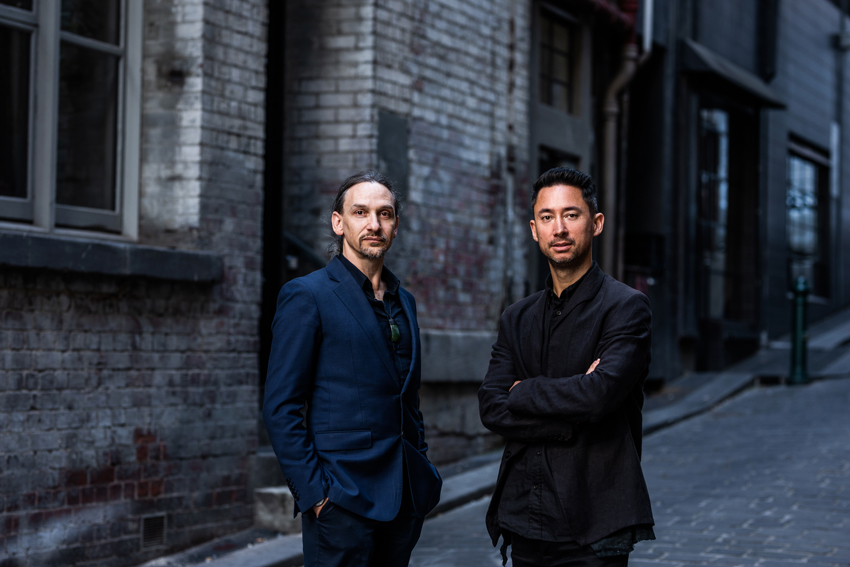
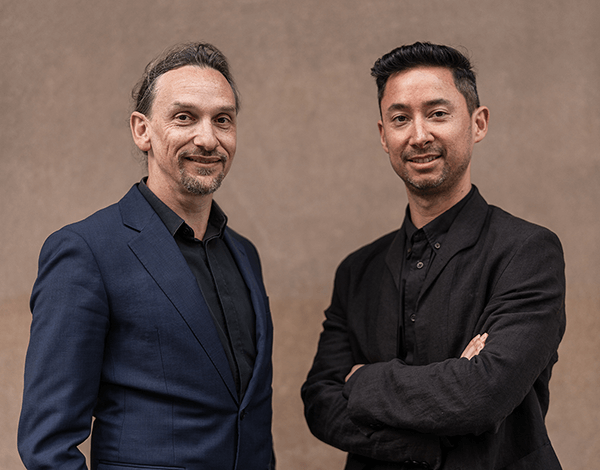
2021 Venice Biennale Australian Creative Directors Jefa Greenaway and Tristan Wong
2021 Creative Directors
2021 Venice Biennale Australian Creative Directors Jefa Greenaway and Tristan Wong | Photographer: Anthony Richardson
IN|BETWEEN: BUILDING CULTURAL CONNECTIONS THROUGH ARCHITECTURE
Architecture has the power to build connections and understanding between First Nations cultures in Australia, the Pacific region and beyond. This is the compelling concept behind In|between, the Australian exhibition of the 2020 Venice International Architecture Biennale.
Creative Directors Tristan Wong and Jefa Greenaway, along with Tim Ross, Elizabeth Grant, Aaron Puls and Jordyn Milliken, will demonstrate the potency of design collaboration to create culturally appropriate and meaningful architecture, while also highlighting the connections between First Nations people across the Australasian region.
Embracing Australia’s diversity, its rich Indigenous heritage and multiplicity of languages, In | between will showcase a collection of architectural projects from Australia and the Pacific region and explore how design can be a powerful form of communication that can evocatively represent Indigenous and non-Indigenous narratives.
PRESENTING AUSTRALIAN ARCHITECTURE To THE WORLD SINCE 2006
We raise the international profile of Australian architecture through active participation in global events such as the Venice Architecture Biennale – the world’s most prestigious celebration of the practice.
Through the Biennale, we present Australia’s contribution to world architecture before an international audience of influential architects, designers, urban planners and critics. In turn, we also encourage the local and international professional community to continue finding ways to develop a more efficient and sustainable built environment for the future.
New dates
The Venice Architecture Biennale has made the decision to postpone the 2020 event due to the current public health emergency.
Support Australia in Venice and be a part of something big as we seek to advance architecture through international dialogue, answering the call – The Laboratory of the Future
Network, build connections and engage with the local and global architecture and design community and be recognised as a leader with acknowledgement of support throughout Australia’s marketing campaign and on the ground in Venice.
Join Network Venice now and maximise your VIP benefits.
For more information please contact Tamara Smith, National Commercial and Business Development Lead at tamara.smith@architecture.com.au.
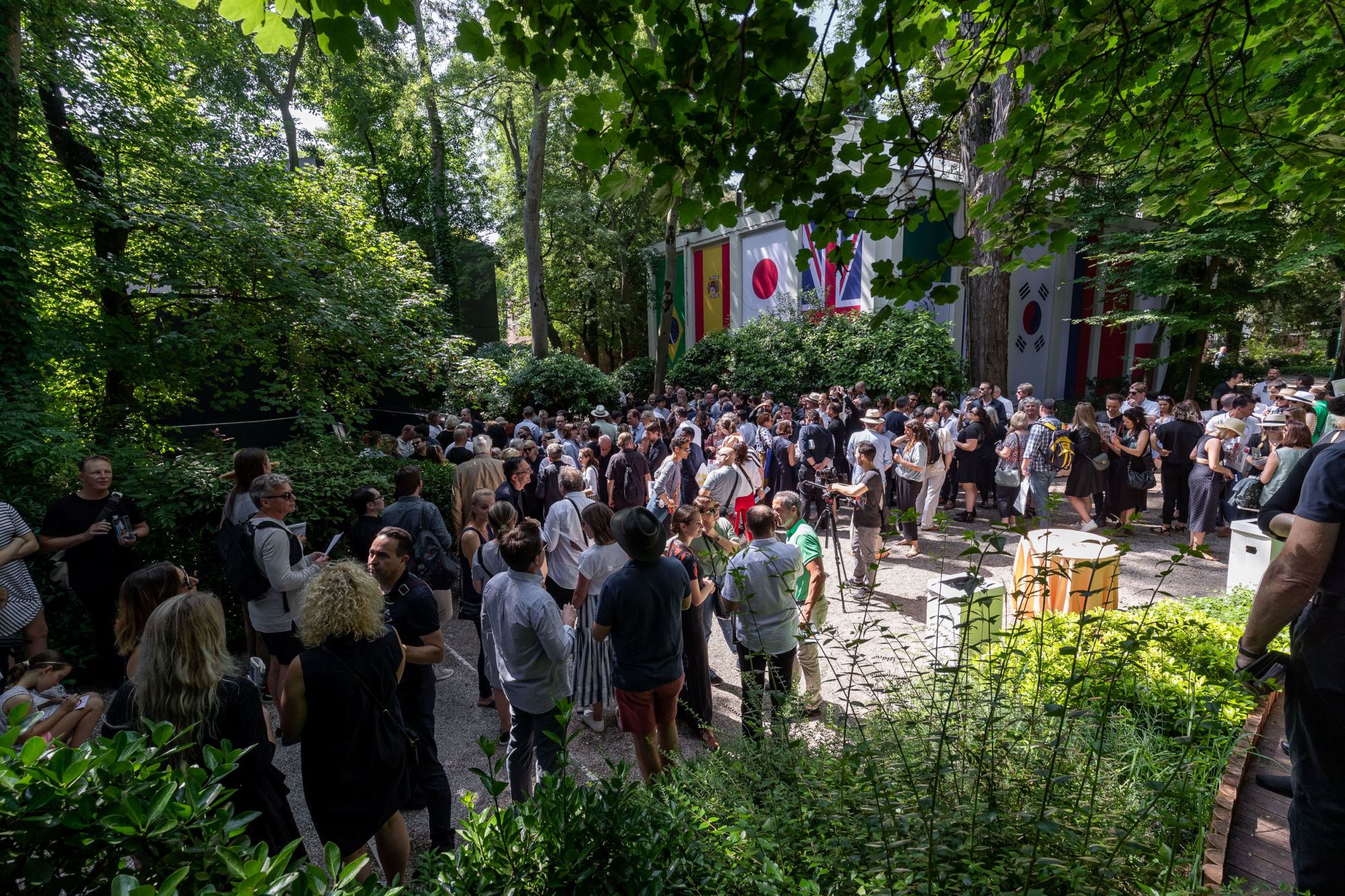
Australia Pavilion Opening Party, Venice | Photographer: Rory Gardiner
Venice 2020
BIENNALE ARCHITETTURA 2020
The 17th International Architecture Exhibition will be curated by architect and scholar Hashim Sarkis with the theme How will we live together?
‘The world is putting new challenges in front of architecture. I look forward to working with participating architects from around the world to imagine together how we are going to rise to these challenges.’ – Hashim Sarkis.
New dates
The Venice Architecture Biennale has made the decision to postpone the 2020 event due to the current public health emergency. The Vernissage preview will now be held on Thursday 27 and Friday 28 August, and the exhibition will run from 29 August until 29 November (instead of 23 May until 29 November).
The Australian Institute of Architects respects this decision as the health and safety of our members, partners and staff, as well as our international colleagues and friends, is our main priority. We look forward to presenting the Australian pavilion alongside the creative team in August.
We will update this page soon with further information.
Inbetween premiered on Thursday 20 May, and will be exhibited this year throughout Australia, across the Pacific region and more broadly, as well as online. “Not being tied to the space in Venice has meant that we’ve been able to create something that can be experienced by a much larger audience. The great thing about the new format is that essentially anyone can access it and it has longevity beyond the dates of the Biennale.” explains Tristan. “This project isn’t a collection of artefacts; it’s forward looking and presents the innovative potential in learning from Indigenous methods and ideas. Embedding practices and knowledge that has been around for more than 60000 years into the way we design buildings creates opportunities for a new kind of architecture that is better for people, cities and the environment.”
“We always wanted to invite people on a journey. The film creates an immersive experience that engages the senses so it’s not simply about the visuals but also the connection to soundscapes and the hearing of language, creating a visceral connection to Country. In the international realm there are still stereotypes around how people understand Australia so we wanted to demonstrate richness and diversity – the different contexts and landscapes that exist in Australia, and more broadly in our region, and how architecture responds to that” Said Jefa.
Past Exhibitions
Repair | Baracco+Wright Architects with artist Linda Tegg | Photographer: Rory Gardiner
2018 - REPAIR
Mauro Baracco, Louise Wright with Linda Tegg
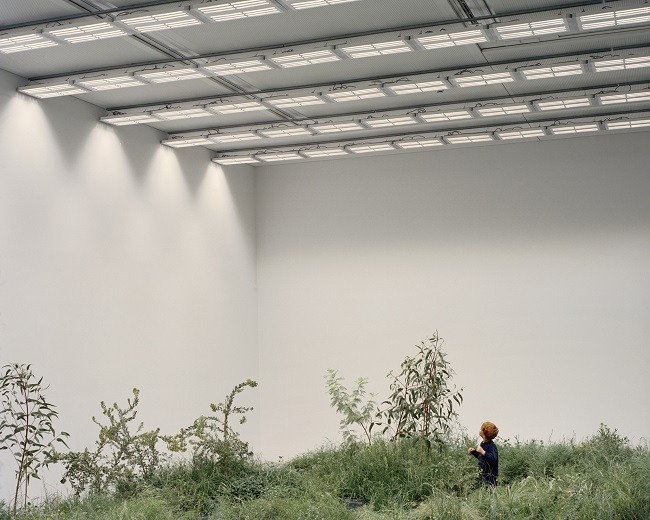
Repair focused on Australian architecture that integrates built and natural systems to effect repair of the environment, and in so doing, mend or improve other societal, economic, and cultural conditions.
On entering the Pavilion, visitors found over 10,000 native Australian grassland plants arranged inside and outside of the Pavilion’s granite structure. This field of vegetation, titled Grasslands, allowed visitors to enter a physical dialogue between architecture and the endangered plant community – with just one percent of these threatened species left in their native Australian environment.
2016 - Australia Pavilion - The Pool by Aileen Sage Architects (Amelia Holliday and Isabelle Toland) with Michelle Tabet. Photo Brett Boardman
2016 - The Pool
Amelia Holliday, Isabelle Toland (Aileen Sage) and Michelle Tabet
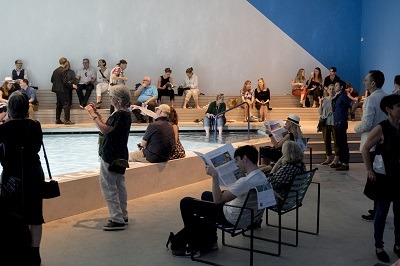
Using the pool as a lens through which to explore Australian cultural identity, the Australia Pavilion was transformed through the use of light, scent, sound, reflection and perspective to create a series of perceptual illusions within a designed landscape.
Eight prominent cultural leaders from various fields were selected to share their personal stories, using the device of the pool as a platform to explore the relationship between architecture and Australian cultural identity. These included Olympic gold medal winning swimmers Ian Thorpe and Shane Gould, environmentalist and 2007 Australian of the Year Tim Flannery, fashion designers Romance Was Born, writer of best-selling book The Slap Christos Tsiolkas, winner of the 2012 Miles Franklin Prize Anna Funder, Indigenous art curator Hetti Perkins and Australian rock-musician Paul Kelly.
The aim of the exhibition was to step outside the architect-to-architect discourse to show how a familiar, common object, the pool, is in fact pregnant with cultural significance, it is both artefact and catalyst of change. The Pool is about public space as a vital component to society and shows the many ways in which its public character is interpreted and occupied.
Augmented Australia 1914-2014 – Minifie van Schaik, Caught Unawares, 2013, Sydney. Digital reconstruction by Ben Juckes.
2014 - Augmented Australia: 1914 - 2014
felix._Giles_Anderson+Goad
Augmented Australia provided a virtual journey through 23 of Australia’s most intriguing unbuilt projects through the use of a dedicated app.
Augmented Australia’s virtual experience began under a temporary Cloud Space, where display images of each project automatically triggered three-dimensional (3D) augmented models, animations and interviews when viewed through the app. Including a 1:1 scale virtual model of the new Australia Pavilion by Denton Corker Marshall overlaid on its construction site.
The exhibition then extended beyond the Giardini with real-world scale augmented models of each unbuilt project geographically positioned in various locations around Venice, marking the largest exhibition of its kind ever seen.
2012 - Formations: New practices in Australian Architecture
Anthony Burke, Gerard Reinmuth, with TOKO concept design
Formations provided a cross-section of the state of Australian architecture and singled out thirty-three unique practice structures corresponding to its agenda. The project was essentially made up of two components: the exhibition, with the unassuming Australia pavilion as its nucleus, and an accompanying catalogue. Of the total thirty-three surveyed practices, the pavilion exhibited six.
The optimism and pluralist sensibility of Formations was laudable. Indeed, it may soon be the case that, as Ole Bouman says, “architecture has become a universal access code, a mother key that may open countless doors in culture and in society.” However, in the meantime, for any current student or young practitioner of a discipline and body of knowledge in turmoil, the need for professional (role) models is acute. The emancipatory bent of Formations is more timely than ever.
Now and When | John Gollings and Ivan Rijavec | Photographer: John Gollings
2010 - Now and When
John Gollings and Ivan Rijavec
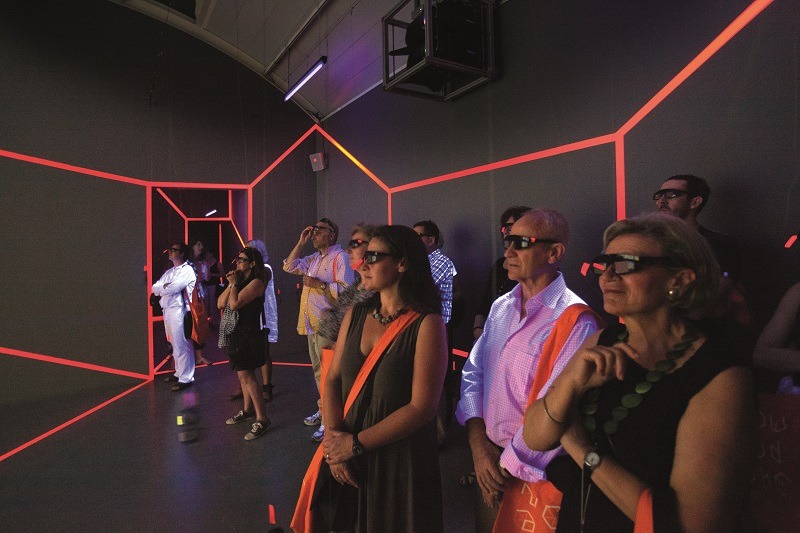
Now and When explored the challenges facing our cities, engaging in timely issues that included sustainability, urban sprawl and density.
The ‘NOW’ component featured aerial views of Australian urban landscapes, including Melbourne, Sydney and Surfers Paradise, contrasted with giant mining pits at Kalgoorlie and Mt Newman by renowned architectural photographer John Gollings. The ‘WHEN’ component, overseen by Ivan Rijavec and produced by FloodSlicer, featured a sequence of ideas from 17 architectural collaborations of possible future urban spaces, including floating or submerged cities, or desert spaces.
Now and When exhibited on a completely new form of 3D stereoscopic technology, which goes beyond the latest cinematic release. Visitors were able to move around these urban scenes and experience the urbanised worlds from different perspectives.
Abundant | Neil Durbach, Vince Frost, Wendy Lewin, Kerstin Thompson and Gary Warner | Photographer: John Gollings
2008 - Abundant
Neil Durbach, Vince Frost, Wendy Lewin, Kerstin Thompson and Gary Warner
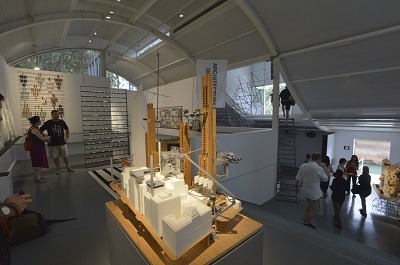
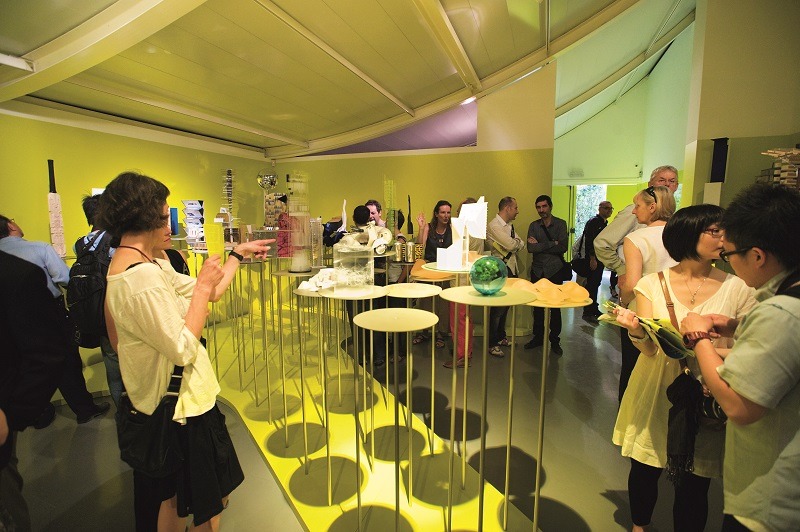
Abundant Australia explored the astonishing ability of Australian architects to blend new influences, dramatic landscapes and Australia’s unique multicultural society. Featuring over 140 architectural models of both domestic and commercial buildings from prominent Australian architects, including Ashton Raggatt McDougall, Denton Corker Marshall and Iredale Pedersen Hook, the exhibition revealed an architecture that is distinctly Australian.
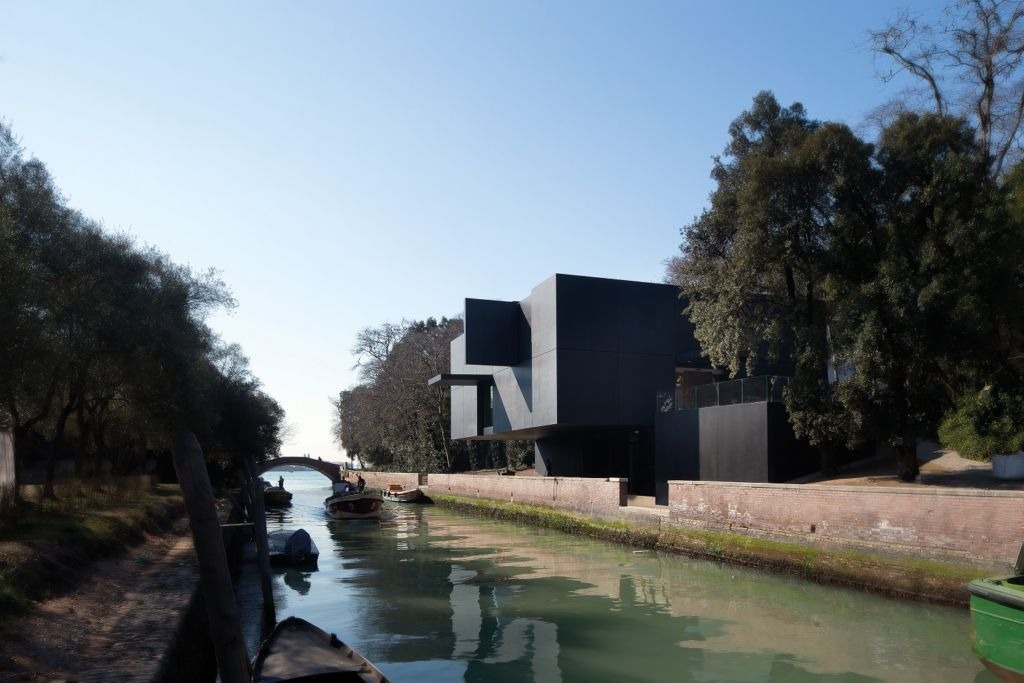
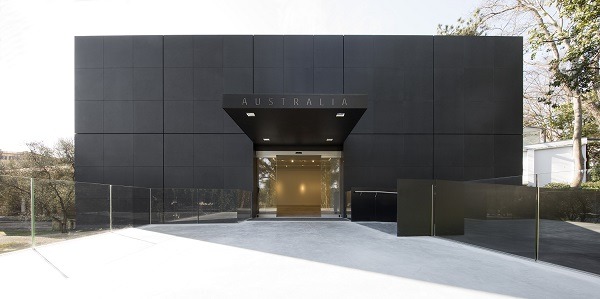
Australia is one of 29 countries to be granted a permanent exhibition site within the Giardini della Biennale. In 2015, the Australia Council for the Arts unveiled Australia’s new permanent pavilion designed by Denton Corker Marshall. This new pavilion replaced a temporary exhibition space designed by Philip Cox in 1988, in use until 2013.
We gratefully acknowledge the Australia Council for the Arts for the use of the Australia Pavilion during the biennial architecture exhibition.
Australia Pavilion | Denton Corker Marshall | Photographer: John Gollings
Venice Biennale partners
The Australian Institute of Architects gratefully acknowledges the support given by the Australian Council of the Arts.
Principal Event Partner
Project Partner
Major Partner
Platinum Event Partner
Network Venice Platinum Partner
Network Venice Platinum Partner
Network Venice Gold Partners
Janet Holmes a Court AC
Penelope Seidler
Network Venice Silver Partners
Anita Belgiorno-Nettis AM Luca Belgiorno-Nettis AM
Venice Biennale Bronze Partner
Venice Biennale Media Partner
Venice Biennale Event Sponsor
This website uses cookies to improve your experience. We'll assume you're ok with this, but you can opt-out if you wish. Cookie settingsACCEPT
Privacy & Cookies Policy
Privacy Overview
This website uses cookies to improve your experience while you navigate through the website. Out of these cookies, the cookies that are categorized as necessary are stored on your browser as they are as essential for the working of basic functionalities of the website. We also use third-party cookies that help us analyze and understand how you use this website. These cookies will be stored in your browser only with your consent. You also have the option to opt-out of these cookies. But opting out of some of these cookies may have an effect on your browsing experience.
Necessary cookies are absolutely essential for the website to function properly. This category only includes cookies that ensures basic functionalities and security features of the website. These cookies do not store any personal information.